
An Outdoor Infrared Sauna Through Four Seasons: What the Year Actually Looks Like
There's a moment every outdoor sauna owner remembers, and it isn't the first session. It's the first frost warning.
Karl, one of our customers in Minnesota, called us on a September evening. His Wearwell sauna had been on the patio since Labor Day weekend (This is a customer who purchased an Wearwell sauna back in 2025) — placed, leveled, wired to the outlet he'd had ready all summer, and used dutifully through long evening sessions.
Then the forecast said the season's first hard freeze, and Karl, by his own admission, spent that evening pacing the kitchen like a man who'd left a dog outside.
"I want you to tell me honestly," he said, "is that thing going to make it to spring?"
We get some version of that call from almost every outdoor customer eventually — usually in September or October, occasionally in the middle of a July downpour. And we understand it completely, because the fear is rational. You've put a wooden room full of electricity in your backyard, and the weather is about to find out what it's made of. Most of what people believe about outdoor saunas comes from that moment of standing at the window, watching the first cold front roll in over a four-thousand-dollar question.
Karl's cabin, for the record, made it to spring and well beyond — and so did his habit, which turned out to be the more remarkable thing. Somewhere in that first Minnesota winter, between the frozen mornings and the −10°F sessions, the sauna stopped being an object he was protecting and became the best part of his day. This is the guide we wish we'd had ready for him that evening: what a year with an outdoor infrared sauna actually looks like, season by season, starting right here in September — from the people who hear about it in real time.
A purpose-built outdoor sauna doesn't fight the seasons — it moves through them. Rain, snow, summer sun, and autumn leaves are all ordinary weather to a cabin with a pitched roof, weather-rated wood, and sealed electrical.
What actually decides whether your sauna thrives outdoors is decided once, on the day you place it, and then maintained in ten-minute increments, four times a year. Nothing about the calendar should scare you.
Autumn: The Thirty Minutes That Protect the Whole Year
If the calendar has a maintenance season, it's the one you're standing in right now, and it costs about thirty minutes across a single weekend. This is the checklist we send our outdoor customers every September, and it reads shorter than it feels:
- Clear the roof and the perimeter. Leaves, seed pods, and the first fallen branches love flat surfaces and wall gaps. Ten minutes with a broom and a rake ends their season.
- Walk the seams. Run a hand along the roof edges and base trim, looking for any seal that's lifted or any gap that's opened with the summer's expansion. Anything suspicious gets addressed in warm weather, not discovered in a January thaw.
- Check the drainage story. The ground around the cabin gets one more look before the rains turn heavy. Water that soaks away easily in September has a way of standing still in November.
- Confirm the cover fits. The breathable cover that shielded the cabin in July has one more job coming: winter idle stretches. Make sure it goes on clean and dry.
- Run a full test session. Heat the cabin to temperature once before the cold arrives and listen. A new rattle, a slow panel, a control that hesitates — every one of these is a five-minute phone call now and something else entirely in February.
That's the entire autumn obligation. Thirty minutes, once a year, standing between your cabin and every winter horror story you've ever read in a forum. The owners who do it tend to be the ones whose saunas look new in year eight — not because they're diligent people in general, but because they made one thirty-minute appointment with themselves every October and kept it.
And if you haven't placed a cabin yet — if you're the reader shopping in this exact season — know that autumn is secretly the best placement month of the year. The ground is firm, the heat of summer has passed, and a cabin set up now gets its level, its drainage, and its routine dialed in before the first snow ever tests them. Spring placement works fine. Fall placement lets you walk into winter already practiced.
Winter: The Season That Converts the Skeptics
And then comes the season everyone feared and nobody regrets.
Here's what actually happens to an outdoor infrared sauna in a real winter, and it's the part Karl didn't believe until he lived it: the cold does almost nothing to the session. Infrared heats your body directly — the panels work exactly as hard in January as they do in June, and your core temperature climbs the same way regardless of what the air is doing beyond the glass.
The only honest difference is the preheat, which stretches from twenty minutes on a mild day to thirty or a bit more when the mercury dives. That's the entire tax. You tap the button on your way to change clothes, and the cabin is ready when you are.
What the cold adds, nobody quite expects. Stepping from a 130°F cabin into sharp, clean night air is a sensation that owners start scheduling their days around — the flush, the steam rising off your shoulders into the porch light, the sky enormous and bright above a snow-quieted yard.
There's a reason the Nordic countries built their whole sauna culture around exactly this transition. Winter isn't the threat to an outdoor sauna. Winter is the payoff.
The deep winter sessions tend to coincide, almost accidentally, with the best sleep data of the year — the post-session temperature drop lands on cold nights with particular force. If you've read our guide to how often to use an infrared sauna, you already know frequency is where the benefits compound; winter is when an outdoor owner's frequency quietly wins the year.
The winter workload, for those keeping score: sweep heavy snow off the roof edge, keep the path to the door shoveled, and glance up once at anything above the cabin.
That last one matters more than it sounds — snow and ice sliding from a deck edge or a porch line carry real weight, and it's the single most avoidable outdoor sauna accident we hear about. Stand in your yard in February and look up. The rest of winter is just enjoying the thing.
Spring: The Decision the Next Decade Lives Inside
Everyone braces for winter and nobody prepares for spring, which is backwards — because spring is when outdoor saunas are placed, and placement is the one decision the following years live inside.
Walk your yard before the cabin ever arrives, and look at it the way water does. Where does rain collect when it pours? Which patch stays soft and dark for days after a storm? That low corner by the fence, the one that squishes underfoot until June — that's not your sauna spot, no matter how private and pleasant it looks in May.
The right site is the highest, flattest ground you can offer: a concrete pad, a bed of pavers, or a deck section that doesn't flex. Level matters more than beauty; a cabin even half an inch off-center will telegraph that slope through its door for the next fifteen years.
Then look up and around. A spot under a large deciduous tree buys you summer shade and sells you autumn gutter-cleaning duty, because leaves, needles, and sap are the quiet tax of shady placement. A fully exposed spot in an open yard sheds weather beautifully but turns the glass wall into a greenhouse in July.
The placements owners end up happiest with tend to share one trait: morning or evening sun instead of noon sun, with a few feet of open air on every side and a clear, short run to the outdoor outlet.
There's a quieter reason to think hard about the walk, too, and it has nothing to do with weather. The customers who use their outdoor cabins most aren't the ones with the prettiest yards — they're the ones with the shortest, most sheltered path from the back door. Twenty feet across a patio feels like nothing in January. Eighty feet across an open, windswept lawn is a decision you'll have to make every single evening, and decisions are exactly what habits die of.
Before final placement, run the garden hose on the spot for ten minutes. It's the cheapest site survey that exists: wherever the water pools is exactly where you don't want the cabin standing in November.
Two minutes with a level and a shovel on day one — recess the pad, pack the gravel, confirm the fall of the ground — saves a decade of slow, patient regret.
Summer: When the Enemy Is the Sun, Not the Rain
By midsummer, most outdoor owners have discovered the season's real surprise: weather was never the worry — sunlight is. Ultraviolet exposure is what fades, bleaches, and eventually roughens an exterior finish, and it works in slow motion on a cloudless week in ways that no single storm ever matches.
The countermeasures are pleasantly small. A breathable cover during vacations and long idle stretches does most of the work. A session of shade — a pergola, the shadow line of the house after four in the afternoon — does the rest, which is one more reason the placement decision in spring keeps paying dividends all summer.
In humid regions, from the Gulf states up through the Mid-Atlantic, the other summer task is simply air: leave the door ajar after sessions so the cabin dries fully, and don't let the surrounding vegetation grow up against the walls, because trapped, humid air is the one invitation rot ever needs.
Summer also delivers the ritual that sells more outdoor saunas than any marketing we could write: the evening session after the heat breaks. There's something about a warm July night — the yard dark, the crickets going, the cabin glowing softly at the edge of the lawn — that no indoor wellness room has ever replicated.
tell us summer is when their neighbors start asking questions. It's also when the sessions run longest, because nobody's watching a clock when the evening is this good.
| Season | What Nature Delivers | Your Ten Minutes |
|---|---|---|
| Autumn | Leaves, debris, first freezes | The thirty-minute checklist: roof, seams, drainage, cover fit, one test session |
| Winter | Snow, ice, deep cold | Sweep snow off the roof edge, keep the path clear, glance up at anything that could shed ice, let the longer preheat run |
| Spring | Soft ground, growth, pollen, rain | Placement decisions made once, properly — level, high ground, airflow, short power run |
| Summer | UV exposure, heat, fast vegetation | Cover during idle stretches, keep plants trimmed back, door ajar to dry after sessions |
Look at that table again and notice what's missing: nothing in any season requires expertise, equipment, or more than ten unhurried minutes. Four seasons, four small habits. The rest is just enjoying the thing.
What Separates a True Outdoor Cabin From a Wish
Everything above assumes one thing, and it deserves its own paragraph: the cabin was built for this. A purpose-built outdoor infrared sauna carries a pitched roof that sheds rain and snow instead of pooling them, wood chosen for weather rather than appearance, sealed joints at every seam, and electrical components rated for the outdoors.
An indoor cabinet placed in a yard and blessed with a cover is none of those things — it's a countdown. We've walked through all four failure points in detail in our guide to what makes an outdoor infrared sauna last year-round, and if you're comparing cabins right now, that's the next ten minutes you'll spend.
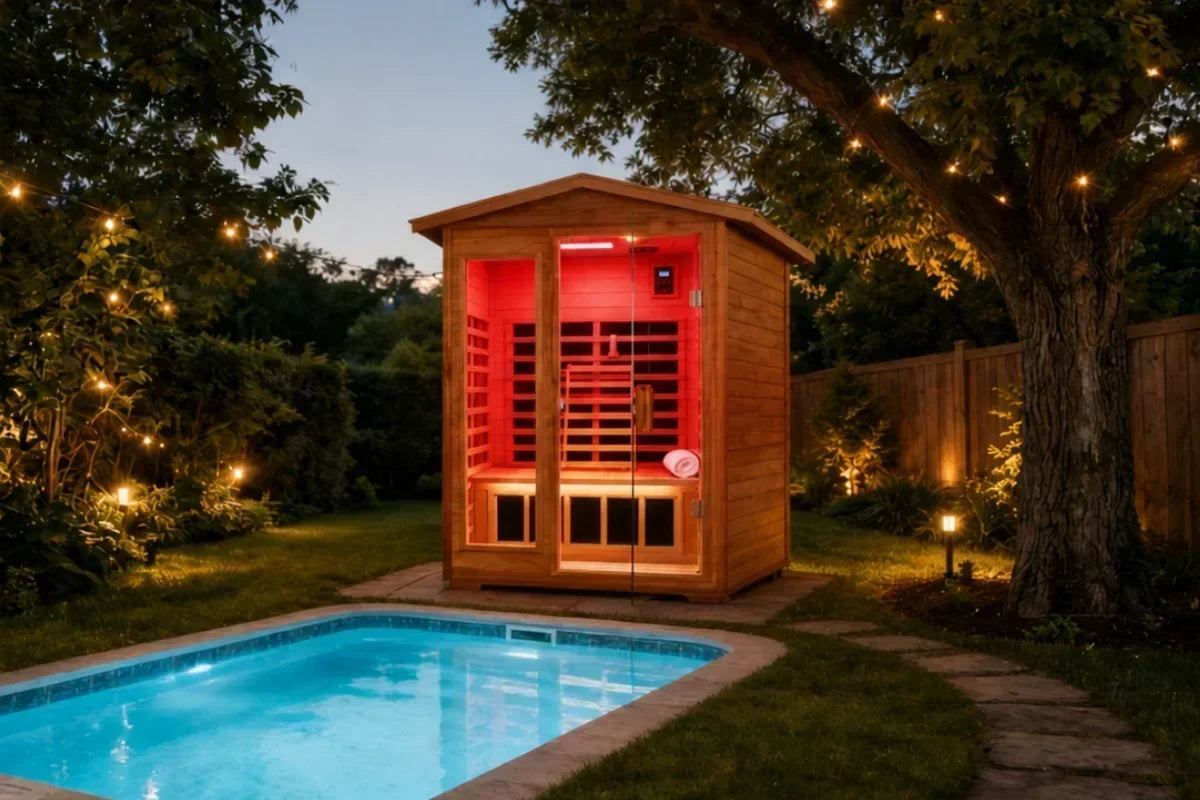
Our own outdoor line was designed from the foundation up for exactly this four-season life. The Wearwell-902VT — the cabin Karl watches the first cold front roll past — is built from Central African coastal mahogany, a species that endures humid, rain-heavy coastal air and long desert droughts with equal indifference, and it runs on nine ultra-low EMF far infrared panels with an optional red light upgrade. At about 58 inches wide with the roof, it settles onto a standard patio pad without claiming the yard.
For single users, the wearwell 901VT carries the same weather-rated build in a smaller footprint. Both ship with our 2-year warranty on heaters and electrical and 1 year on the wood, with factory-direct pricing that skips the showroom entirely — and if you're still weighing whether outdoor placement suits you at all, our guide on whether you can put an infrared sauna outside and our backyard buying guide cover the decision from every other angle.
Frequently Asked Questions
Where is the best place to put an outdoor sauna in my yard?
On the highest, flattest, most level ground you can offer — a concrete pad, pavers, or a solid deck section — with open air on all sides, protection from midday sun, and a short, sheltered path from the house. Avoid low spots where water collects and anything that can shed snow onto the roof.
Does snow damage an outdoor infrared sauna?
Not a purpose-built one. The pitched, sealed roof sheds snow the way any outdoor structure's does; your job is just to keep heavy buildup from accumulating at the edges. The cabin itself is insulated and heated from within whenever it runs — snow on the roof is scenery, not a threat.
Do outdoor infrared saunas use more electricity in winter?
A modest amount — the longer preheat (roughly 30 minutes on cold days) draws a little extra, but the session itself costs the same, since the panels heat you directly rather than fighting the air. Daily winter use still lands in single-digit dollars per month on a typical bill.
What maintenance does an outdoor sauna actually need?
About ten minutes per season: clear debris from the roof and perimeter in fall, keep vegetation trimmed in summer, confirm drainage in spring, sweep roof edges in winter, and let the cabin dry out after sessions. That's the entire commitment — no annual restoration, no resealing rituals, no special products.
Can I leave my outdoor sauna uncovered in summer?
A weather-rated cabin tolerates sun, but a breathable cover during long idle stretches — vacations especially — is what keeps the wood looking new in year five rather than bleached and rough. Think of the cover as sunscreen, not shelter.
Is winter really a good season to use an outdoor sauna?
For most owners it becomes the favorite. Sessions heat your body directly regardless of air temperature, the contrast of stepping into cold night air is part of the pleasure, and the post-session temperature drop lands hardest on cold nights — which is when many owners log their deepest sleep.
How long do outdoor infrared saunas last?
A purpose-built cabin in weather-rated wood — coastal mahogany or Western red cedar — with the seasonal habits above should serve fifteen to twenty-five years. The budget kits that fail within five are failing on wood thickness and roof design, not on the weather's persistence.
We've been building heating products since 2004, and the Wearwell outdoor line is the answer to the question we heard most across those two decades: can this live in a real yard, in real weather, all year? We built the cabins to say yes — coastal mahogany that shrugs off humidity and drought alike, pitched weather-sealed roofs, nine ultra-low EMF far infrared panels, and electrical rated for the outdoors.
Because we sell factory-direct, the price reflects the build rather than a showroom's rent: the 902VT sits at $2,979, and the same engineering backs every cabin with a 2-year warranty on heaters and electrical and 1 year on the wood, with real people on the line for every season that follows. Explore the outdoor line and the rest of the range at salusheat.com/collections/all-products.
- Central African coastal mahogany and pitched, weather-sealed outdoor roofs
- Nine ultra-low EMF far infrared panels, documented and tested
- Optional red light therapy upgrade for skin and recovery benefits
- 2-year warranty on heaters and electrical, 1 year on the wood, optional extensions
- Factory-direct pricing and support from the people who build the cabins
An outdoor sauna isn't a decoration you protect from the weather. Done right, it's the room where you finally stop minding it.
Share your placement, your winter stories, or your questions in the comments below. Somewhere out there, someone is pacing their kitchen on the first frost-warning night, waiting for exactly this conversation.
This article is for informational purposes only. Site placement, electrical work, and local building or permit requirements should be confirmed with qualified professionals and your local authorities before installation. Individual product specifications vary by model.
