
Outdoor Infrared Sauna Year-Round: What Makes One Last
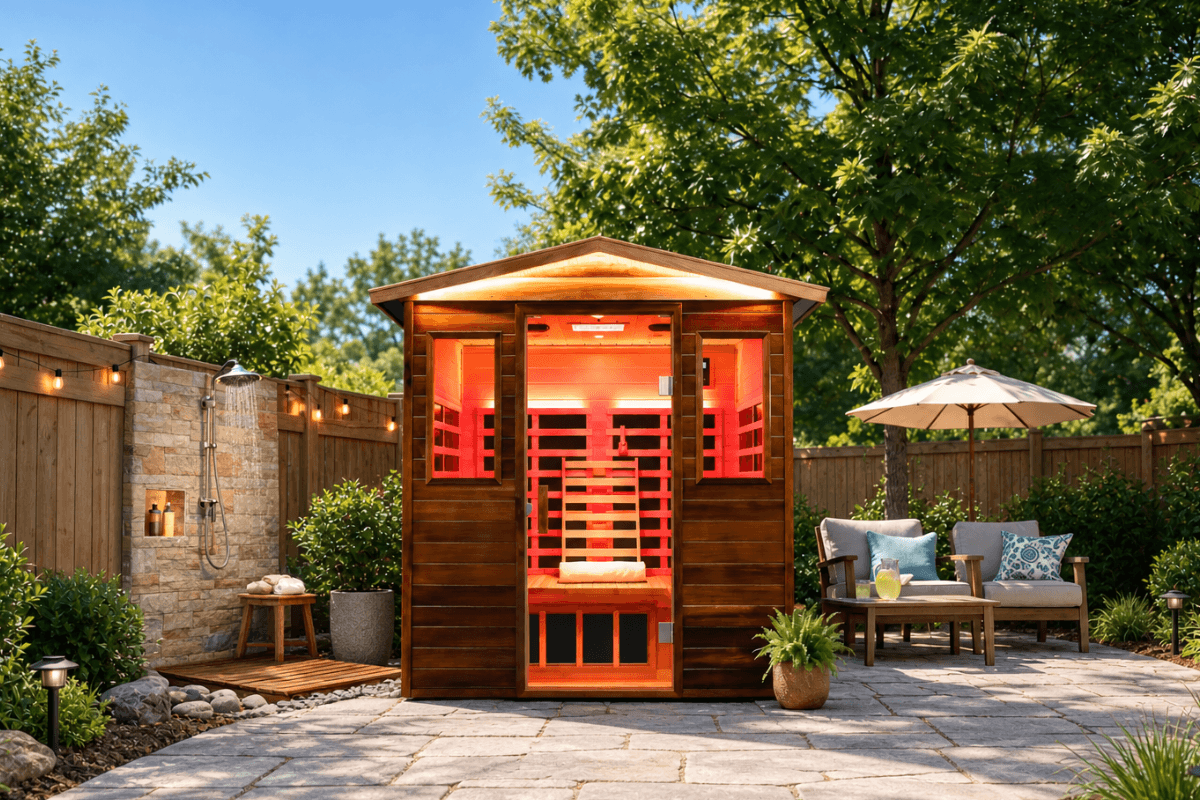
You have a backyard.Maybe a deck, maybe a concrete pad, maybe just a stretch of lawn that gets good afternoon light. You want a home sauna, and you've been pricing them out, but the house doesn't have an obvious indoor spot for a cabin.
The garage is crowded, the basement is finished, and the spare bedroom is doing something else. So the idea of putting a sauna outside keeps coming back.
And then the doubt creeps in.
What happens when it rains?
What about snow piling up on top?
Does the wood warp when summer gets brutal and then winter rolls back around? You've seen patio furniture that looked great in April and was sad by November.
When you're browsing listings for an outdoor sauna or typing "infrared saunas near me" into a search bar, every product photo looks sunny and perfect.
The skepticism about year-round weather is completely fair.
Here's the reframe, though: a purpose-built outdoor infrared sauna is not an indoor cabin that someone left in the weather and hoped for the best. It's engineered from the roof down for a life outside. Different roof shape.Different wood species. Different electrical certification. Different joinery.
It's a genuine backyard sauna category, not an afterthought, and it exists because the engineering challenge is real and the solution is specific.
We've been building saunas at SalusHEAT since 2004, and outdoor infrared models are some of the builds we're most proud of because they demand the most from the design.
This article is everything we'd tell a friend who called us up and asked: "Can an outdoor infrared sauna actually last through every season?"
The short answer is yes. The longer answer is what follows.
An outdoor infrared sauna's durability comes down to four things: the roof, the wood, the sealing and joinery, and the electrical protection. Get those four right and year-round outdoor use in most US climates is completely realistic, rain, snow, and summer heat included. Get any one of them wrong and no warranty sticker will save the cabin.
What Actually Wears Down an Outdoor Sauna
Before we talk about what makes a great outdoor sauna, it helps to name the actual threats. None of them are dramatic. They're just the daily and seasonal realities that a well-built cabin takes in stride while a poorly built one slowly loses.
Moisture in its many forms. Rain is obvious, but ground splash from heavy rain, snowmelt sitting at the base, and the slow humidity cycling between wet and dry seasons are just as damaging over time. Wood that gets wet and dries quickly is fine. Wood that stays damp is where rot and warping begin.
UV exposure. Direct sun is hard on wood finishes and any surface that isn't designed for it. Over a few seasons, unprotected wood grays and fades. The structure stays sound longer than the appearance, but the appearance matters too.
Temperature swings. Freeze-thaw cycles put stress on joints and joinery. Wood expands in heat and contracts in cold, and joints that aren't cut tightly enough or sealed properly will eventually open up. In the Midwest and Northeast, this is a real design consideration.
Neglect. Leaves packed against the base hold moisture. Debris on the roof keeps things wet longer than they should be. An annual once-over takes twenty minutes and sidesteps most of what goes wrong with outdoor wood structures. We'll get to the maintenance rhythm later, because it's genuinely simple.
The Four Things That Make an Outdoor Sauna Last
The Roof
A flat-topped sauna is an indoor sauna. Outdoor saunas need a pitched roof, specifically a gable or similar slope, so that rain runs off and snow doesn't pool and press down. A pooling load of wet snow on a flat lid is a slow disaster: the water gets into seams, the weight stresses the structure, and freeze-thaw cycles do the rest over a few winters.
A proper gable roof with a real overhang does two jobs at once. It sheds precipitation away from the cabin and it protects the walls and the door from direct rain exposure. That overhang is not a decorative choice. It keeps the side panels drier, which is where most of the long-term weatherproofing work happens.
In the Midwest, the Great Plains, and the Northeast, snow load is a genuine factor. A well-pitched roof distributes that load and encourages shedding naturally. After a particularly heavy storm, brushing the roof off takes two minutes and is good practice regardless of roof pitch.
The Wood
Wood choice is where outdoor sauna longevity gets decided at the factory, before the cabin ever reaches your backyard. The three species you'll encounter most often each behave very differently outside.
| Wood | Indoors | Outdoors | Notes |
|---|---|---|---|
| Canadian Hemlock | Excellent: stable, smooth, lightweight | Adequate with consistent maintenance | Needs regular exterior sealant outdoors; best for indoor or covered placement |
| Fir (Douglas Fir / White Fir) | Very good: dense, stable, classic | Good: durable and dimensionally stable | Solid outdoor choice; annual sealant recommended; handles temperature swings well |
| BC Red Cedar | Outstanding: aromatic, naturally antimicrobial | Excellent: the gold standard for outdoor use | Natural oils resist moisture, rot, and insects; handles coastal humidity and desert dryness; less maintenance than hemlock or fir |
Cedar's reputation outdoors is earned, not marketed. The natural oils in red cedar actively resist moisture absorption and inhibit rot and insect damage without any chemical treatment. It's why cedar fencing, cedar siding, and cedar decking have been the standard for exterior wood applications for generations. And yes, it smells extraordinary inside a warm sauna cabin. That scent is part of the experience in a way that's hard to describe until you've sat in a cedar sauna after it's warmed up.
Sealing and Joinery
A sauna that's cut from good wood but assembled with loose joinery won't stay tight. Tongue-and-groove construction, done precisely, creates a wall that moves as a unit through expansion and contraction rather than opening at the seams. Exterior-grade sealant at the joints, the roof line, and around any penetrations (vents, electrical) closes the gaps that moisture is always looking for.
The base matters more than most buyers realize. A cabin sitting directly on bare soil or in a shallow depression where water pools is fighting a losing battle no matter how good the wood is. The base of the cabin should be elevated or fully sealed, and the ground beneath it should drain. We'll say it again when we get to placement tips.
When your outdoor sauna is delivered, take five minutes to check the roof seams and the base perimeter before you run your first session. A small bead of exterior sealant on any gap you spot is cheap insurance for years of dry winters.
Electrical Protection
This is the part of the outdoor infrared sauna conversation that separates the purpose-built models from everything else. Indoor infrared saunas use electrical systems designed for a controlled indoor environment: no rain, no condensation on the exterior panels, no temperature swings from well below freezing to summer heat. Put that electrical system outside and you're asking it to do something it wasn't rated for.
A proper outdoor infrared sauna uses certified rainproof electrical systems throughout: the heaters, the control panels, the wiring runs, and any exterior connections. The difference is not visible from a product photo, which is why it matters so much to ask about it specifically.
A 120V plug-in model like our smaller outdoor cabins can simply plug into a standard outdoor-rated GFCI outlet on your house or deck, which makes installation genuinely easy.
Larger cabins that draw more power typically require a 240V circuit, which is a one-time electrician visit to set up correctly.
Placement is one of the highest-leverage decisions you'll make, and it costs nothing extra. Set your outdoor sauna on a deck, a concrete pad, or a bed of pavers rather than directly on bare soil.
If you have an existing roof overhang, a pergola, or a covered patio area, that's ideal. Leave a few inches of clearance around the cabin on all sides for airflow: this prevents moisture from trapping against the walls. These choices, made once at installation, genuinely extend the life of the cabin by years.
Season by Season: What Year-Round Actually Looks Like
Winter
Infrared heats your body directly rather than heating the air around you, which means cold outdoor temperatures don't defeat the session the way they might with a traditional sauna. In January, your warm-up time might extend by five or ten minutes compared to July. Once the cabin reaches temperature, you won't notice the season outside.
The part most winter sauna owners didn't expect to love: stepping out into cold night air after a session. There's something about the contrast, the shock of cold on warm skin, the quiet of a backyard in January, that makes winter the favorite sauna season for a lot of people. Snow sitting on a gable roof is fine. After a heavy storm, brush off any significant accumulation, which takes about two minutes with a soft broom.
Spring and Fall
These are the sweet-spot months. Temperatures are moderate, the cabin heats up quickly, and outdoor time is genuinely pleasant before and after a session. Rain on the roof while you're warm inside is something most owners mention unprompted as one of their favorite parts of having an outdoor sauna. There's a particular kind of quiet in a cedar cabin with rain on the gable roof. It's a good reason to own this thing.
Summer
Summer sessions work best in the morning or evening when the ambient temperature is lower. The cabin handles the heat without complaint, the wood is stable, and the structure is fine. UV is the real summer variable: direct sun degrades wood finish and fades surfaces over seasons. A shaded placement helps, and a once-a-year application of exterior wood sealant keeps the wood looking and performing the way it should. Think of it like treating a good piece of outdoor furniture: a small, predictable task.
A note on the extremes: in the desert Southwest, intense UV and dramatic daily temperature swings put more demand on wood sealant, so you may find yourself refreshing the exterior coat every season rather than every other year. On the Gulf Coast and in the Pacific Northwest, sustained high humidity is the variable. Cedar handles both better than any other common sauna wood. Neither of these climates makes an outdoor infrared sauna impractical. They just shape the maintenance rhythm.
The Maintenance Rhythm: Simpler Than a Lawn Mower
People sometimes imagine that an outdoor sauna requires the same kind of upkeep as a wood deck or a hot tub. It doesn't. The annual commitment is closer to maintaining a good pair of leather boots: a few minutes of attention each season keeps everything in great shape.
- After heavy snowstorms, brush accumulated snow off the roof with a soft-bristle broom. This takes two minutes and is good practice through any snowy winter.
- Rinse pollen, bird debris, and general grime off the exterior two or three times a year with a garden hose on a gentle setting. No pressure washing.
- Check and refresh exterior wood sealant once a year, or as needed based on your climate. Cedar needs less frequent treatment than hemlock or fir. Spring is a natural time to do this.
- Keep the base perimeter clear of leaves, soil buildup, and debris. Anything that holds moisture against the bottom of the cabin is working against you.
- After sweaty sessions, wipe down the interior benches with a damp cloth or a diluted white vinegar solution. The interior wood stays clean and the cabin smells fresh.
- Run the cabin periodically even during months when you use it less. Infrared heaters like being used: occasional sessions in the off months keep the electrical components happy and the interior dry.
That's it. Realistically this is an hour or two of your attention across an entire year, spread across the seasons. Most people spend more time on a lawn than on a well-built outdoor sauna.
Indoor Cabin Outside vs. a Purpose-Built Outdoor Sauna
This distinction matters more than most buyers realize when they're comparing prices online. An indoor infrared sauna placed outside typically fails in four specific places. The roof is flat and unsealed, so water finds every seam.
The wood is untreated hemlock rated for interior use, so it weathers faster than expected. The base sits directly in moisture contact because it was never designed to drain. And the electrical system isn't rain-rated, which is a safety issue, not just a durability one.
A purpose-built outdoor model addresses all four at the design stage, not as afterthoughts or upgrades. When you're comparing a lower-priced indoor sauna with a higher-priced outdoor model, those four design differences are exactly what you're paying for. The outdoor engineering costs more to execute. It's also what makes the investment hold up.
We hear from customers who tried the indoor-model-outside approach and came to us afterward. The stories are consistent: the roof seams opened up in the second winter, the wood darkened and softened in the corners near the base, the control panel started having issues in heavy rain. By the time they called us, they'd already spent the money once. The outdoor version done right is the cheaper decision over five years.
SalusHEAT started in 2004, built out of a medical device engineering background where standards are high and corner-cutting has real consequences. We went direct to families in 2019 because we believed a better sauna shouldn't require a retail markup to get to someone's backyard. The mission is straightforward: affordable, honest saunas in more homes.
We build outdoor infrared saunas because most brands avoid them. The requirements are demanding, the tolerance for shortcuts is low, and the engineering has to be right at the design stage. Our outdoor cabins use certified rainproof electrical systems, weather-rated construction, cold-weather insulation, and climate-appropriate wood. That's the baseline we hold ourselves to, not an upsell.
If you're at the browsing stage, here are the two outdoor models we'd point a friend toward first.
For couples or anyone working with a smaller outdoor footprint: the Garner-902VS 2-person outdoor infrared sauna. This was our original 2019 outdoor design and it's still one of our best sellers, which tells you something. It's built in fir with a classic American gable roof, plugs into a standard 120V/15A outdoor outlet (no electrician required), and ships at around 284 lbs fully kitted out. There's an optional 660nm and 850nm red light panel upgrade if you want that added therapy layer. Simple, proven, and genuinely handsome in a backyard.
For families or households that sauna together: the Wearwell-904VRN 4-person outdoor low EMF infrared sauna in red cedar. British Columbia red cedar throughout, 12 ultra-low EMF heaters, sized for four adults, and specified to handle coastal rain and desert dryness with equal composure. If you've been searching "infrared saunas near me" or browsing "sauna for sale" listings hoping to find something actually worth owning long-term, this is what that search was leading toward.
- Certified rainproof electrical systems, designed for year-round outdoor life
- Climate-matched wood options, from durable fir to BC red cedar
- Classic gable roof designs that shed rain and snow
- Ultra-low EMF heater arrays, tested and documented
- Factory-direct pricing with a 2-year warranty on heaters and electrical, 1 year on the wood, and optional extensions available
One more thing we don't see other brands do, and honestly we're not sure why, because it means a lot to us. Every year we schedule a round of free in-home maintenance visits for SalusHEAT owners in California: one of our technicians comes out, checks the cabin over, and tunes up whatever the seasons have worn on. The thank-you notes that arrive afterward, and occasionally the small gifts customers press on our techs, tell us we're doing something right. No other sauna company we're aware of offers that, and we plan to grow it state by state until it's available across the country.
The right outdoor sauna is the one that's still standing proud in your backyard five winters from now.
Frequently Asked Questions
Can an infrared sauna stay outside all year?
Yes, if it's a purpose-built outdoor model with a pitched roof, weather-rated wood, proper sealing, and certified rainproof electrical. Most US climates are well within what a quality outdoor infrared sauna is built to handle, all four seasons.
Does snow damage an outdoor sauna?
A well-pitched gable roof sheds snow naturally. After heavy storms, brushing off significant accumulation is good practice and takes about two minutes.
How long does an outdoor infrared sauna last?
A purpose-built outdoor model in good wood, properly maintained, should serve you for fifteen years or more. The heaters and electrical are typically the first components to age, which is why warranty coverage on those parts matters.
What kind of base does an outdoor sauna need?
A deck, concrete pad, or pavers are all solid choices. The goal is a level, stable surface that drains well and keeps the cabin base out of standing water.
Does an outdoor sauna take longer to heat up in winter?
Slightly, yes. Expect five to ten extra minutes in very cold weather. Once the cabin reaches temperature, the infrared heat experience is the same regardless of season.
Is cedar really worth it for an outdoor sauna?
For outdoor placement, yes. Cedar's natural oils resist moisture, rot, and insects better than hemlock or fir, require less maintenance over time, and the scent inside a warm cedar cabin is genuinely part of the experience.
Can I put an indoor sauna outside if I cover it?
We'd advise against it. Covering mitigates some UV exposure but doesn't address the flat roof, the unsealed base, or the indoor-rated electrical, which is where the real durability and safety issues arise.
What maintenance does an outdoor sauna actually need?
Annual exterior wood sealant, occasional exterior rinses, clearing debris from the base, and wiping interior benches after use. Most owners spend one to two hours per year on maintenance in total.
This article draws on published sauna research, including Laukkanen et al. (Mayo Clinic Proceedings, 2018), Beever (Canadian Family Physician, 2009), and Hannuksela & Ellahham (The American Journal of Medicine, 2001). Any outdoor electrical work, including outlet installation for your sauna, should be completed in accordance with local building codes and by a qualified electrician.
