
How Long Should You Stay in an Infrared Sauna? (2026 Guide)
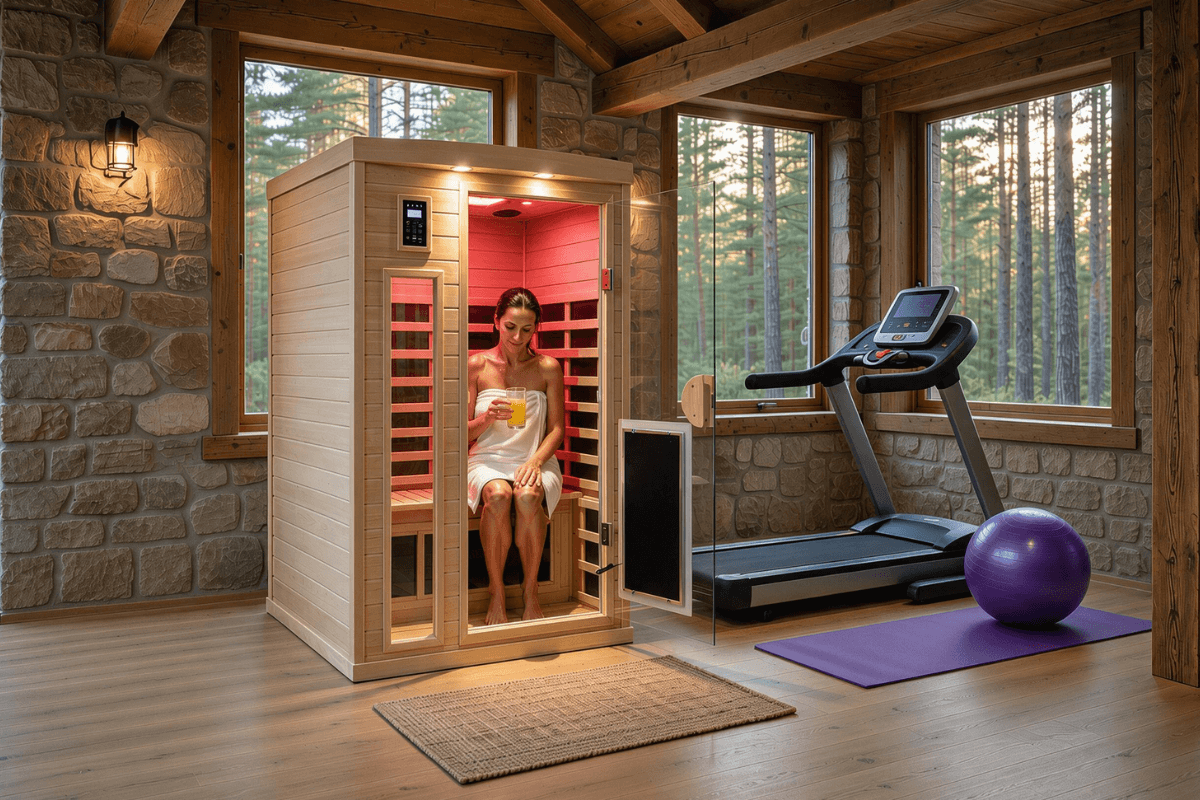
You bought the home sauna. Or you're about to. Either way, you opened the manual, you Googled it, you typed "infrared saunas near me" while you were shopping, you scrolled Reddit, and every source handed you the same three words: twenty to thirty minutes. Nobody explained where that number came from. Nobody told you what happens at minute eight, or minute thirty-five, or whether a fifteen-minute session on a busy Tuesday morning is worth anything at all.
The question sounds so simple. It really isn't.
Session length is one of those things where the generic advice is actually pretty good advice, but following it blindly means you'll either quit too early (wondering if you "did enough") or push past the point where the session is doing you any good. Both happen constantly. We hear from customers about it all the time.
So we're going to walk through the real reason that number exists, what changes it for you specifically, what your body is telling you that your controller display is not, and how to find the session length that you'll actually want to repeat tomorrow. Because repeatability is the whole game. By the end of this, you'll have your number.
Session length is driven by your core temperature, not the clock. The benefits researchers track (improved circulation, deep relaxation, muscle recovery, better sleep) come from raising your core temperature roughly 1 to 2 degrees Fahrenheit. In an infrared cabin running between 120 and 140 degrees F, that takes most people somewhere in the 20 to 30 minute range to achieve. Longer is not automatically better. Consistent is better.
The Short Answer, Before We Go Deeper
Here is a practical starting framework. Think of it as a map, not a prescription.
| Experience Level | Cabin Temperature | Session Length | Sessions Per Week |
|---|---|---|---|
| First few weeks | 110 to 120 degrees F | 10 to 15 minutes | 2 to 3 |
| Regular user | 120 to 135 degrees F | 20 to 30 minutes | 3 to 5 |
| Experienced, heat-adapted | 130 to 140 degrees F | 30 to 45 minutes max | 4 to 7 |
These are guardrails, not rules. Your body will write the final version, and we mean that literally. Pay attention. The table gives you a reasonable place to start; your actual experience refines it from there.
Why 20 to 30 Minutes Is the Sweet Spot
It helps to understand what is actually happening inside that cabin, minute by minute. The warmth you feel is doing real physiological work, and it unfolds in stages.
Minutes 0 to 5. You step in and the heat settles over you like a hand on your shoulders. Your muscles start letting go of the ambient tension they've been carrying all day. Your skin temperature rises quickly. Nothing dramatic yet, just the beginning of something good.
Minutes 5 to 10. Core temperature begins its slow climb. Blood vessels dilate. Blood flow to the surface increases. Your body is starting to prioritize heat management, and that cardiovascular response is where a significant portion of the physiological benefit lives.
Minutes 10 to 15. The first real sweat arrives. That first bead at your hairline, then another at your temples. Heart rate rises gently, roughly comparable to a brisk walk. You're working, but comfortably. Your breathing slows even as your circulation quickens. It's a genuinely pleasant paradox.
Minutes 15 to 30. This is the productive window. Core temperature is up 1 to 2 degrees. Circulation is elevated. The relaxation response is fully engaged. The body is warm, the mind tends to follow. Most of the benefits tied to regular infrared sauna use happen in this window.
After about 40 minutes. Diminishing returns arrive, and dehydration starts to matter more. Your body shifts from "enjoying the heat" to "managing the heat," which takes increasing physiological effort. More time in the cabin is not more benefit; it's more stress on your system.
The landmark research on sauna use and cardiovascular health (the Finnish cohort work that most sauna science builds on) is based on sessions in roughly this range, repeated regularly over years. Not marathon sits. Not punishing temperatures. Consistent, moderate sessions, repeated often. That's the pattern that shows up in the data.
What Changes Your Ideal Number
No two bodies are the same, and no two days are the same even in the same body. Here are the five things that shift the calculation most meaningfully.
Cabin Temperature
A 120-degree cabin and a 140-degree cabin are genuinely different conversations. Infrared sauna temperature shapes session length more than almost any other variable. At the lower end of the range, your body climbs to core temperature more gradually, and you can often sit comfortably for 30 minutes or longer. At 135 to 140 degrees, you'll hit that core temperature elevation faster, which means your productive window arrives sooner and a 20 to 25 minute session may be entirely sufficient. Turning the heat all the way up and sitting for 45 minutes is not an advanced move. It's usually just unpleasant.
Your Heat Adaptation
New users often notice they sweat late and feel fatigued quickly. That's normal. Your body hasn't learned to pre-cool yet, hasn't built the plasma volume that regular sauna use gradually develops. After a few weeks of consistent sessions, you'll notice something real: you start sweating sooner, you tolerate the heat more easily, and you come out feeling refreshed rather than depleted. That adaptation is physiologically genuine. It's not imagination. It's a measurable change, and it's one of the most satisfying things about building a regular practice.
Hydration and What You Ate
Show up dehydrated and your session will feel harder than it should. A large meal in the last 90 minutes redirects circulation to digestion, which competes directly with your body's heat management. The practical guidance: drink about 500 ml of water before you step in and another 500 ml after you step out. Eat lightly if you're planning a session within a couple of hours. Simple math, big difference.
Time of Day
Morning sessions tend to feel more energizing. The post-sauna clarity (that slightly buzzy, warm alertness) sets a good tone for the day. Evening sessions, ideally 1 to 2 hours before bed, are where the sleep benefit really lives. The mechanism isn't magic: your core temperature rises in the cabin, and the subsequent drop after you step out mimics the natural temperature decline your body uses as a sleep signal. That drop actually deepens sleep onset. Infrared sauna before bed is a legitimate sleep strategy, not just a relaxation marketing claim.
Health Considerations
If you're on blood pressure medication, managing a cardiovascular condition, or you're pregnant, please talk to your doctor before establishing a sauna routine. This is not a liability disclaimer buried in fine print. It's genuine advice. Shorter sessions while you learn your personal response are smart for anyone in these categories. Ten minutes at a comfortable temperature, see how you feel, build slowly. The sauna isn't going anywhere.
Reading Your Body: When To Step Out
Dizziness, nausea, a pounding headache, a racing or irregular heartbeat, or the strange sensation of suddenly feeling cold while surrounded by heat: these are all signals to stop. Not toughness tests. Not things to breathe through. Step out, sit or lie down somewhere cool, drink water, and let your body recover. The session you cut short is never a failure. The session you push through when your body is clearly telling you to stop is how people get hurt, and we'd rather you come back tomorrow for a 15-minute session than not come back at all.
One thing worth being honest about: the number on your controller display and the temperature your body actually experiences are not always the same number. Infrared cabins stratify heat. The sensor is often mounted mid-cabin or near the ceiling, and the air temperature at seated shoulder height can differ noticeably from what the panel reads. This is a well-known quirk of home infrared saunas, not a defect in any specific product. It's physics. Trust your body's response over the readout.
If your cabin seems to climb to temperature slowly, give it a proper preheat. Depending on the ambient temperature of the room, that's typically 15 to 25 minutes from power-on to ready, and an outdoor cabin on a genuinely cold morning may need a little longer. Start your session timer when you step inside, not when you press the button. That one habit change can transform what felt like an underwhelming session into exactly what you were hoping for.
Frequency Beats Duration
This is probably the single most counterintuitive finding in the sauna research, and it's worth saying plainly: a 25-minute session four times a week outperforms a 60-minute session on Sunday. By a meaningful margin, based on what the data actually shows.
The Finnish cohort research that tracked thousands of men over decades found dose-dependent cardiovascular benefits, and the dose was primarily session frequency, not session length. Four to seven sauna sessions per week of moderate duration showed the strongest associations with reduced cardiovascular risk, not occasional long sessions. The body adapts to patterns, not to occasional heroics.
Daily use is well tolerated by most healthy adults. Many of our customers who use their cabins five or six days a week report it becomes as unremarkable a habit as coffee: you just do it, you feel better for it, and you notice when you skip. That's the version of sauna practice worth building toward. Short, consistent, and genuinely enjoyable.
Getting More Out of Every Minute
Preheat matters more than most people realize. Step into a fully preheated cabin and your core temperature starts climbing from minute one. Step into a cold cabin and you spend the first ten minutes doing the work your preheat should have done. Your 30-minute session is not a 30-minute session if the cabin is still warming up while you sit in it.
A few habits that make a real difference:
- Preheat fully. Get the cabin to temperature before you step in. Your timer starts at the door, not at the power button.
- Rinse quickly before. A quick shower before your session clears surface oils and helps sweat flow freely. You'll notice it.
- Bring water in with you. A water bottle inside the cabin means you stay ahead of dehydration rather than catching up after.
- Sit still and breathe. Put the phone down. The relaxation response is a real part of the benefit, not a soft add-on. Scrolling through emails while your core temperature climbs misses half the point.
- Finish with a lukewarm rinse. Not ice-cold (unless that's your preference). Lukewarm clears the sweat and helps your body settle back to baseline comfortably.
- Drink 500 ml of water afterward. Every time. Not optional.
- For the sleep benefit: keep it calm and dim. If you're using the evening session to improve sleep, dim the lights in the cabin if you can, keep the post-session wind-down quiet, and avoid screens for at least 30 minutes after. You're trying to deepen the body's descent into sleep, and bright light and stimulation work against that.
Frequently Asked Questions
Is 30 minutes in an infrared sauna too long?
For most regular users, 30 minutes at 120 to 135 degrees F is right in the productive range. It's not too long at all, provided you've preheated properly, you're well hydrated, and you feel good throughout.
How long should a beginner stay in an infrared sauna?
Start with 10 to 15 minutes at a lower temperature (110 to 120 degrees F) for the first few weeks. Give your body time to adapt before extending sessions, and step out any time you feel unwell.
Can I stay in an infrared sauna for 45 minutes or an hour?
It's generally not recommended. Beyond about 40 minutes, dehydration and thermal stress outweigh the benefits for most people. Forty-five minutes is occasionally fine for very heat-adapted adults at moderate temperatures; an hour is rarely a good idea.
How often should I use my infrared sauna each week?
The research points to 4 to 7 sessions per week as the range with the strongest associations with health benefits. Daily use is well tolerated by most healthy adults and is something many of our customers settle into naturally.
Does a longer session mean more detox or weight loss?
Not meaningfully. Most of the fluid you lose in a longer session is water weight that returns with rehydration. The metabolic and circulation benefits plateau well before the 45-minute mark; duration beyond that adds heat stress, not bonus benefit.
What's the best time of day to sauna?
Morning sessions tend to feel energizing; evening sessions 1 to 2 hours before bed support sleep through the post-session temperature drop. Pick the time you'll actually use consistently, because frequency is the real driver of results.
Should I wait after eating before a sauna?
Yes, give yourself at least 90 minutes after a full meal. Digestion competes with your body's heat management, and a post-meal session often feels uncomfortable and cuts short faster than it should.
What if my sauna takes a long time to heat up?
Allow 15 to 25 minutes of preheat time depending on your room temperature, and start your session timer when you step inside at full temperature, not when you power on. Cold cabins that are still climbing feel unrewarding and affect your actual core temperature response.
We started in 2004 as Salubrious Heating, building our earliest products with a medical device engineering sensibility: precise, reliable, and designed around how the body actually responds to heat rather than around what looks impressive in a spec sheet. We've been selling direct to families since 2019, which means we hear from the people using our cabins every day, not filtered through a retail layer.
Our cabins are built around the 20 to 30 minute protocol because that's exactly where the research and real-world comfort overlap. Ultra-low EMF heater arrays that warm the cabin evenly. A temperature range that reaches the 1 to 2 degree core elevation sweet spot without making the session feel punishing. Cabin sizes designed so you're actually comfortable enough to sit still and be present for the full session, not perched awkwardly or fighting the heat. If you'd like to find the right size and model for your space, browse our indoor, outdoor, and portable infrared saunas at salusheat.com/collections/all-products.
- Ultra-low EMF engineering, tested and documented
- Even heater coverage for consistent, whole-body core warming
- Comfortable 120 to 140 degree F range designed for 20 to 30 minute sessions
- Indoor, outdoor, and portable lines for every space and lifestyle
- Factory-direct pricing with a 2-year warranty on heaters and electrical, 1 year on the wood, and optional extensions available
The best session length is the one that brings you back tomorrow.
This article draws on published sauna research, including Laukkanen et al. (Mayo Clinic Proceedings, 2018), Beever (Canadian Family Physician, 2009), and Hannuksela and Ellahham (The American Journal of Medicine, 2001). It is for informational purposes only and does not constitute medical advice.
)