
How Much Does an Infrared Sauna Really Cost in 2026? An $800–$15,000 Breakdown
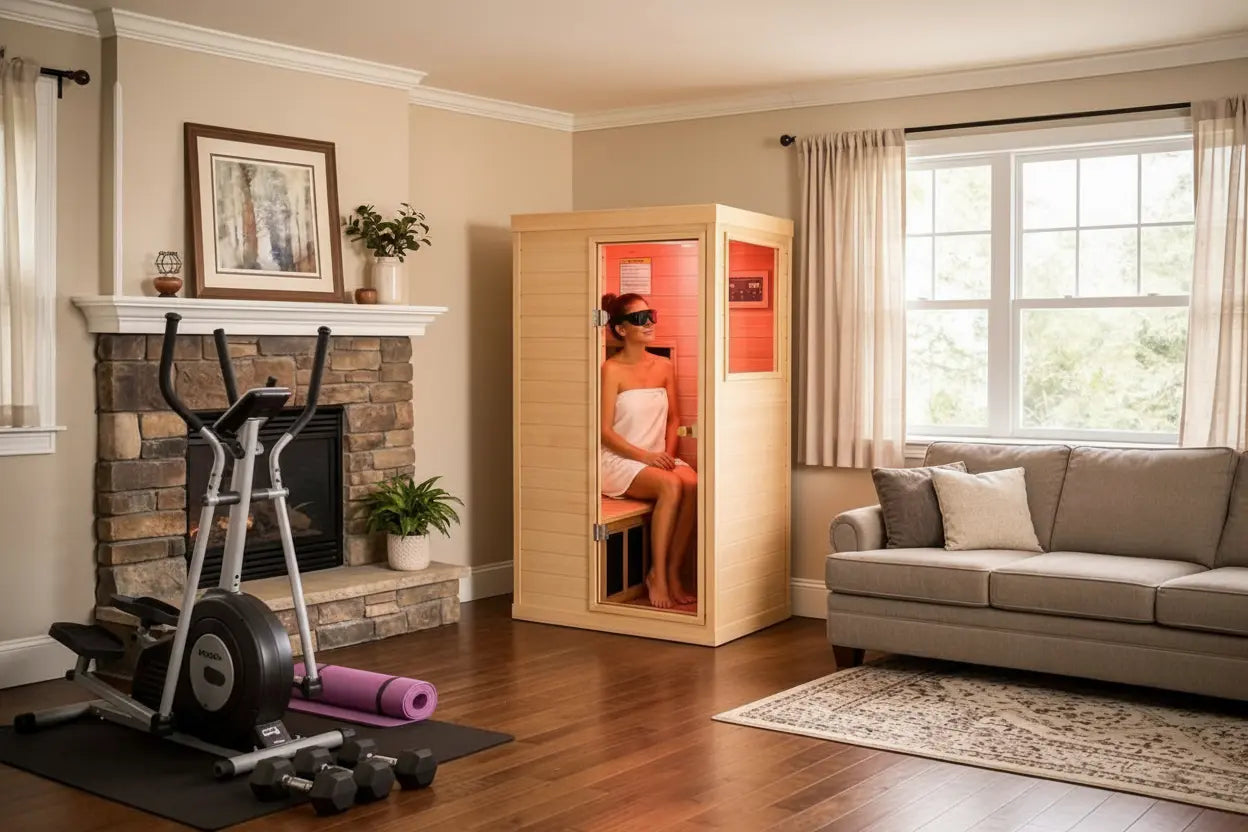
Here's a strange thing about shopping for an infrared sauna in 2026: the same Google search can show you a cabin for $899 and another for $14,500 — and both listings will use the word "premium."
That spread isn't a typo, and it isn't pure markup either.
Somewhere between those two numbers sits the question every careful buyer eventually asks: what am I actually paying for — and what did the cheaper one quietly leave out?
We've built saunas for over two decades and sold them directly to families since 2019, so we've seen the inside of both ends of that range. This breakdown covers what each price tier really buys in 2026, the costs that never make it into the product title, and the one pricing trick — dealer markup — that silently adds thousands to anything sold through a showroom.
An infrared sauna's price is four things stacked together: the wood, the heaters, the sales channel, and the support behind it.
A suspiciously low price rarely means the factory discovered a cheaper way to make good panels — it means something was skipped, or nobody plans to answer the phone in year two.
Read every price tag as a receipt of what was prioritized and what was cut.
The 2026 Price Map: What Each Tier Actually Buys
After two decades in this industry, here's the honest lay of the land. Prices overlap between tiers, so read the "what to watch" column as carefully as the numbers.
| Price Range | What You Typically Get | What to Watch |
|---|---|---|
| $800 to $2,500 — budget imports | Thin hemlock or unspecified wood, generic carbon panels, basic controls, 90-day to 1-year coverage | Unnamed wood species, unpublished EMF numbers, and support that tends to end with the return window |
| $2,000 to $4,000 — factory-direct | Named wood species (hemlock, mahogany, red cedar), documented low-EMF panels, red light options, real multi-year warranties | The honest middle, where most careful buyers land — verify the EMF readings and warranty terms are published, not promised |
| $4,000 to $8,000 — premium retail brands | Full-spectrum heaters, larger cabins, polished marketing, showroom availability | A significant share of the price is dealer and showroom margin, not better wood or heat |
| $8,000 to $15,000+ — custom and luxury | Custom cedar interiors, designer finishes, white-glove installation | You're paying for craftsmanship and labor — the infrared itself doesn't improve above the mid-range |
One thing worth pausing on: a $2,200 marketplace cabin and a $2,200 factory-direct cabin are not the same animal wearing the same price. The next two sections explain why.
What the $900 Price Tag Doesn't Show You
Budget saunas aren't cheap because their makers found efficiencies. They're cheap because specific corners were cut, and those corners have names: heater quality, wood thickness, EMF documentation, and anyone answering support after day thirty.
Three scenes from real owners show how it plays out.
The $1,000 "deal" that needed a renovation. A buyer on Reddit described a coworker selling a brand-new 4-person infrared sauna for about a grand — a tempting price, until the rest of the sentence arrived: "Price is great but I'd need to do a decent chunk of basement work." The cheap sauna is rarely just the sauna. It's the sauna plus the electrical work, the room modifications, and the weekend labor nobody itemized at checkout.
The defective panels nobody would replace. One owner of a well-known premium brand spent hours on support calls trying to get a brand-new unit working, only to be told the heating panels were defective and would need replacing. The heater is the entire point of an infrared sauna. When it fails and the brand goes quiet, the cabin is furniture.
The kit that warped by season two. In a builders' group, an owner posted that much of their affordable outdoor kit's wood had warped within two seasons. The veteran reply was blunt: budget kits are built to a roughly five-year lifespan, with gentle treatment.
A $900 sauna that lasts five years costs $180 per year of use — plus the hassle of disposal and buying again. A $3,000 cabin built to last twenty years costs $150 per year. The cheaper sauna costs more. Before you buy at any price, ask for three numbers: the EMF reading at seated position in milligauss, the wood species and panel thickness, and the warranty length on the heaters specifically — not on "the product."
The Dealer Markup Nobody Puts on the Price Tag
Here's the part of sauna pricing that almost never gets said out loud. The traditional sales channel runs manufacturer, to importer, to distributor, to showroom — and each layer adds its margin.
Industry reporting puts the dealer markup alone at 40 to 60 percent of the final price.
That $6,500 showroom cabin? Somewhere around $3,800 to $4,000 of it is the actual product. The rest is floor space, commissioned sales staff, and the "sale ends Sunday" sign that's been up since March. The sauna isn't better. The supply chain is longer.
This is exactly why factory-direct brands have grown so fast in this category. When the company that builds the cabin also sells it, the middleman's margin doesn't disappear into someone's pocket — it goes back into thicker lumber, better heaters, and a price that reflects the product instead of the pipeline. If you want a sharper eye for telling the difference, our guide on how to actually evaluate an infrared sauna brand walks through the questions that expose which one you're looking at.
What It Costs to Actually Run One
The sticker price is the number everyone fixates on. The running cost is the number that surprises people — pleasantly, for once.
A 1 to 2 person infrared cabin plugs into a standard wall outlet and draws less than 15 amps — about the same as a hairdryer. At average US electricity rates, a 30-minute session costs roughly 20 to 30 cents.
Use it daily and you're looking at maybe $6 to $9 a month on the power bill. No special wiring for most smaller cabins, no gas line, no water hookup.
Now compare that with the alternative people are actually weighing. Sauna studios charge $30 to $60 per session.
Go three times a week and you're spending $400 to $700 a month — every month, forever.
A $2,500 home cabin breaks even against that habit in well under a year. Over a 15 to 25 year lifespan, the per-session cost of a quality home sauna drops below $1.50.
Budget for the costs that don't appear in the product title: curbside delivery versus threshold placement, a dedicated circuit if your model needs one (an electrician visit typically runs $300 to $800 for a 240V line), an afternoon of two-person assembly, and — for outdoor cabins — a level pad and a breathable cover. None of these are large.
All of them are easier when you see them coming.
Where SalusHEAT Sits on That Map
Full transparency, since you're reading this on our site: we sit in the factory-direct tier, and we chose to be there on purpose.
Our own factory builds every cabin, and we've sold directly to families since 2019 — no importer, no distributor, no showroom commission folded into your price. The range runs from the Purity-909MH at $1,079 (the value sweet spot in our guide to choosing an infrared sauna under $2,000, which compares six models in five minutes) up to the Wearwell-902VT outdoor cabin at $2,979 in Central African coastal mahogany, with red-light-enhanced far infrared models starting at $2,299 in between.
Every cabin ships with documented ultra-low EMF panels, a 2-year warranty on heaters and electrical, a 1-year warranty on the wood cabin, and optional extended coverage if you want it.
And because there's no retail layer between us and you, the support line reaches the people who built the thing.
If you're still narrowing down sizes and formats, the 1-person buying guide covers compact options, and the outdoor sauna guide handles backyard setups. The full range with current pricing lives at salusheat.com/collections/all-products.
Frequently Asked Questions
How much should I spend on my first infrared sauna?
For most first-time buyers, $1,500 to $3,000 from a factory-direct brand is the sweet spot: real named wood, documented low-EMF heaters, and a warranty with teeth. Below $1,000, start asking hard questions about wood species, EMF readings, and who answers support calls.
Why are Amazon infrared saunas so cheap?
The prices are real — and so are the corners being cut. Thinner wood panels, generic heaters with unpublished EMF numbers, and no meaningful support layer after the return window closes. Some buyers get lucky; the ones who don't have no one to call.
Is a used infrared sauna worth buying?
Sometimes, with homework. Test every heating panel in person, inspect the wood for warping and moisture damage, confirm replacement parts are still available for that model, and price in the moving and any electrical work before you commit. A $1,000 used cabin plus $1,500 of installation is a $2,500 cabin.
How much does an infrared sauna cost to run each month?
Less than most streaming subscriptions. A 1 to 2 person cabin draws under 15 amps from a standard outlet, putting a 30-minute session at roughly 20 to 30 cents. Daily use lands around $6 to $9 a month at average US electricity rates.
Does a higher price guarantee lower EMF?
No — and this is one of the most expensive assumptions buyers make. Price and EMF only correlate when the brand publishes actual readings. Ask for the milligauss number at seated position, whatever tier you're shopping in. A $900 sauna with published low readings beats a $7,000 sauna with a vague promise.
What hidden costs should I budget for?
Delivery method (curbside versus room-of-choice), a dedicated circuit or 240V line if your model requires one, assembly help for an afternoon, and — outdoors only — a level pad plus a breathable cover. For most indoor 1 to 2 person cabins on an existing outlet, the extras stay near zero.
Is a home sauna cheaper than going to a sauna studio?
Quickly, yes. Studio sessions run $30 to $60 each, so a three-a-week habit costs $400 to $700 a month indefinitely. A $2,500 home cabin breaks even against that pace in a matter of months — and over a 15 to 25 year lifespan, its per-session cost drops below $1.50.
We started in 2004, building our earliest products with a medical device engineering sensibility: precise, reliable, and priced around what things cost to make well rather than what a showroom could charge for them. When we opened our direct-to-family channel in 2019, it was a deliberate rejection of the layered pricing this industry had normalized.
That's why our catalog spans $1,079 to $2,979 instead of $4,000 to $8,000 — not because we use cheaper wood or weaker heaters, but because there's no dealer margin to feed. The difference goes into Central African mahogany, Canadian red cedar, and documented ultra-low EMF panels. See every model with current pricing at salusheat.com/collections/all-products.
- Factory-direct pricing — no importer, distributor, or showroom markup in your price
- Named wood species on every listing: hemlock, mahogany, red cedar
- Ultra-low EMF heater engineering, tested and documented
- Six models under $2,000, red light options, and true outdoor-rated cabins
- 2-year warranty on heaters and electrical, 1 year on the wood, with optional extensions
The right price isn't the lowest one. It's the one where nothing important was skipped.
Share your real figure in the comments below.
The next buyer comparing an $899 listing to a $2,979 one will thank you for it.
Price ranges in this article reflect typical US market conditions as of 2026 and vary by brand, retailer, configuration, and promotions. Electricity cost estimates assume average US residential rates; your utility pricing may differ. This article is for informational purposes only.
