
How to Actually Evaluate an Infrared Sauna Brand in 2026: Beyond Marketing Claims and Spec Sheets
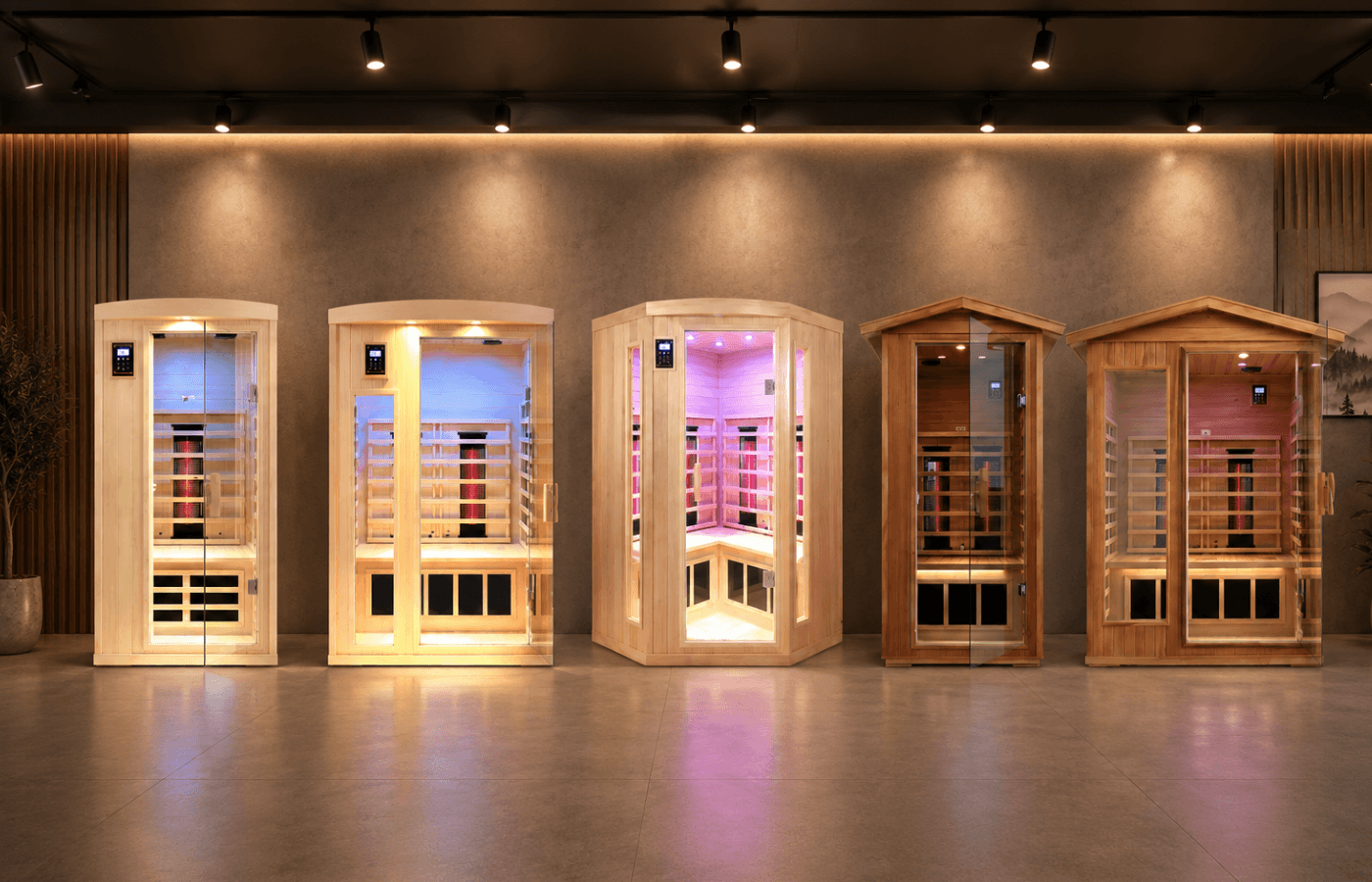
The infrared sauna industry has become dramatically more competitive over the past several years.
A quick search today exposes buyers to endless technical terminology:
- "ultra-low EMF"
- "medical-grade infrared"
- "full spectrum"
- "zero VOC"
- "commercial quality"
- "hybrid heating"
- "near infrared technology"
- "deep penetration heat"
And at first glance, many brands appear almost impossible to differentiate.
Every company claims:
- superior heating
- premium craftsmanship
- safer electrical design
- healthier environments
- better materials
- stronger wellness benefits
But once buyers begin researching more seriously, a very important realization usually happens:
Specifications alone rarely determine long-term ownership satisfaction.
Because after the marketing excitement fades, sauna ownership becomes something much more practical:
- How does the heat actually feel after repeated use?
- Does the sauna fit naturally into everyday life?
- Is the environment comfortable for long sessions?
- Will the materials age well over time?
- Does the design prioritize usability or just showroom appearance?
- Will the experience still feel enjoyable two years later?
And increasingly, experienced sauna buyers are beginning to evaluate brands very differently than first-time shoppers.
The premium sauna market has reached a point where every brand uses the same vocabulary. The differentiator isn't the words anymore — it's the engineering behind them.
The Biggest Mistake Most First-Time Sauna Buyers Make
One of the most common patterns in the infrared sauna industry is that first-time buyers often compare products almost entirely through specifications.
They focus on:
- maximum temperature
- heater quantity
- EMF numbers
- wattage
- Bluetooth systems
- app controls
- LED lighting
- "luxury upgrades"
But experienced owners often describe something very different after months or years of use.
Many eventually realize that the most important parts of sauna ownership are not the features that look impressive online.
Instead, satisfaction usually comes from factors that feel almost invisible during the buying stage:
- thermal comfort
- usability consistency
- balanced heat distribution
- realistic maintenance
- material atmosphere
- ease of repeated use
This is one reason the sauna industry itself has quietly started shifting away from pure "spec sheet marketing" toward ownership-focused design philosophy.
And this shift is becoming increasingly important as more consumers move from occasional spa users to long-term home sauna owners.
Why Modern Sauna Buyers Are Becoming More Educated
Five or ten years ago, most buyers had very little technical understanding of infrared sauna systems.
Today, the market has changed significantly.
Consumers now actively research:
- FIR vs NIR
- carbon vs ceramic heaters
- EMF engineering
- VOC emissions
- wood construction
- heat consistency
- insulation behavior
- long-term energy efficiency
And this growing consumer education is forcing the industry itself to mature.
Because modern buyers are no longer satisfied with vague luxury language alone.
They increasingly want transparency.
Not just:
"premium sauna"
but:
Why the sauna was designed a certain way.
Understanding Infrared Sauna Heating Systems: What Most Brands Simplify Too Much
One of the biggest problems in the infrared sauna industry is how aggressively heating systems are oversimplified during marketing.
Many companies reduce entire thermal engineering systems into a few buzzwords:
- "full spectrum"
- "medical grade"
- "carbon heating"
- "ceramic heating"
- "NIR technology"
- "deep penetrating infrared"
But in reality, experienced sauna owners eventually realize that the overall sauna experience depends far less on a single phrase —
and far more on how the entire thermal environment is engineered together.
Because heat quality is not just about:
- how hot a sauna becomes
- how fast sweating starts
- how strong the panels feel
Instead, true long-term comfort depends on a much larger combination of factors:
| Thermal Factor | Why It Matters in Real Ownership | Common Buyer Misunderstanding |
|---|---|---|
| Heat distribution balance | Determines whether sessions feel relaxing or fatiguing over time | Many buyers assume hotter always equals better |
| Panel positioning | Affects whether heat reaches the body evenly | People often compare only heater quantity |
| Warm-up consistency | Influences comfort during the first 10–15 minutes | Buyers focus too heavily on max temperature |
| Ambient thermal retention | Creates the "surrounding warmth" feeling inside the cabin | Often ignored during online comparison |
| Directional heat intensity | Changes how aggressive or soft the heat feels | Many brands market intensity as luxury |
| Ventilation interaction | Affects breathing comfort during longer sessions | Rarely discussed by manufacturers |
| Cabin sizing efficiency | Impacts heat stability and energy efficiency | Oversized cabins often reduce practical usability |
| Thermal recovery between door openings | Affects session consistency during real daily use | Almost never mentioned in spec sheets |
When reading any infrared sauna spec sheet, ignore the max temperature number entirely. Instead, ask: "How does the heat feel at session minute 25?" That's where real long-term quality reveals itself.
Why Many Experienced Sauna Owners Prefer "Balanced Heat" Over Aggressive Heat
One of the most interesting shifts happening inside the infrared sauna industry is the growing rejection of "extreme heat marketing."
For years, sauna companies competed around:
- hotter temperatures
- stronger heaters
- faster sweat claims
- "maximum infrared penetration"
- extreme thermal output
And while these claims sound impressive online, long-term ownership often changes how people evaluate comfort.
Many experienced users eventually discover that excessive heat intensity can sometimes create:
- shorter sessions
- breathing discomfort
- thermal fatigue
- inconsistent routine usage
- reduced relaxation quality
- less sustainable daily use
In contrast, many users begin preferring sauna environments that feel:
- smoother
- more balanced
- easier to remain inside longer
- less overwhelming psychologically
- more natural for repeated weekly sessions
This is particularly important in home environments.
Because unlike commercial spas, home sauna ownership depends heavily on repetition.
A sauna that feels "impressive" once but exhausting long term often becomes underused over time.
This is one reason SalusHEAT's heating philosophy increasingly emphasizes:
- thermal balance
- distributed warmth
- gradual comfort
- layered heat environments
- repeat-session usability
instead of chasing only maximum intensity metrics.
FIR vs NIR vs Hybrid Heating: What Buyers Should Actually Understand
Another area where the infrared sauna market often becomes confusing is the conversation around infrared wavelengths.
Many brands aggressively market terms like:
- "full spectrum"
- "near infrared"
- "deep infrared"
- "medical infrared technology"
without clearly explaining how these systems actually influence real ownership experience.
Broader ambient warmth
Associated with deeper ambient warming environments, broader thermal coverage, lower surrounding air temperatures, and gentler long-session comfort.
Faster surface-level warming
NIR interacts more directly near the skin surface, creating a more immediate warming sensation and stronger localized heat feel.
Layered thermal experience
Increasingly the industry's preferred direction. Combines the strengths of multiple heating behaviors into one system.
However, NIR integration quality varies dramatically across manufacturers.
Because simply adding near infrared hardware does not automatically create a better sauna experience.
The effectiveness still depends heavily on:
- placement engineering
- thermal balance
- cabin layout
- surrounding ambient support
For example, SalusHEAT's Mix Series combines:
- ceramic tube heaters
- carbon heating panels
- near infrared integration
to create:
| Heating Objective | Why It Improves Ownership Experience |
|---|---|
| Faster thermal response | Reduces waiting time before sessions |
| Balanced surrounding warmth | Improves comfort consistency |
| Reduced hotspot feeling | Creates smoother long-session usability |
| Layered thermal sensation | Makes heat feel more natural and less aggressive |
| More flexible user preference accommodation | Supports both stronger and softer heat preferences |
This reflects a larger evolution happening throughout the sauna industry itself:
Thermal experience is becoming more important than raw thermal intensity.
Why Modern Buyers Are Paying More Attention to Construction Quality
One of the most overlooked aspects of infrared sauna ownership is structural construction quality.
Many buyers initially focus heavily on:
- electronics
- lighting
- app controls
- touchscreen displays
- speaker systems
But experienced owners often discover that long-term satisfaction depends far more on:
- structural stability
- wood expansion behavior
- interior material feel
- odor management
- long-term panel integrity
- moisture handling
- cabin durability over years of heating cycles
This is particularly important because infrared saunas repeatedly undergo:
- heat expansion
- cooling contraction
- humidity fluctuation
- electrical cycling
- repeated thermal stress
Poor construction quality may not appear immediately.
But over years of ownership, weaknesses often emerge through:
- panel warping
- cracking sounds
- instability
- odor development
- material fatigue
- inconsistent heating behavior
This is one reason SalusHEAT increasingly emphasizes:
- tongue-and-groove structural design
- reduced glue dependency
- stable wood selection
- reinforced cabin construction
- balanced thermal engineering
because long-term ownership experience depends heavily on structural consistency over time — not just first impressions during installation.
Why the Sauna Industry Is Quietly Moving Away From "Spec Sheet Luxury"
One of the biggest philosophical shifts happening in the sauna market today is the growing realization that:
Impressive specifications do not always create enjoyable ownership.
For years, the industry heavily emphasized:
- bigger cabins
- more heaters
- more features
- more lighting
- more technical terminology
But modern buyers increasingly prioritize something simpler:
"How does this sauna actually fit into real life?"
This includes questions like:
| Modern Buyer Question | Why It Matters More Today |
|---|---|
| Will I realistically use this often? | Consistency matters more than novelty |
| Does the heat feel sustainable long term? | Comfort influences repeat usage |
| Will this fit naturally inside my home? | Modern homes prioritize practical integration |
| Is maintenance manageable? | Complicated ownership reduces usage frequency |
| Will I still enjoy this after years? | Long-term value matters more than initial excitement |
| Does the construction feel trustworthy? | Buyers increasingly value transparency |
And this shift is fundamentally changing how stronger sauna brands position themselves moving forward.
Because increasingly, the future of the infrared sauna industry is not about creating the loudest product.
It is about creating the most sustainable ownership experience.
How SalusHEAT Fits Into the Future of Modern Sauna Design
SalusHEAT's product philosophy increasingly reflects where the sauna industry itself is heading.
Not toward excess.
But toward balance.
That includes emphasizing:
- practical sizing
- thermal comfort
- hybrid heating integration
- modern home usability
- flexible ownership priorities
- approachable daily routines
Instead of designing every sauna around a single exaggerated claim, SalusHEAT structures different series around different real-world ownership goals.
For example:
Maxwell Series
Focus: Near-zero low EMF engineering and cleaner electrical environment
Ideal for: Users prioritizing low EMF ownership experience
Mix Series
Focus: Hybrid FIR + NIR thermal layering with stronger heating response
Ideal for: Users wanting a more immersive thermal experience
Ample Series
Focus: Modern usability with smart app integration and practical convenience
Ideal for: Lifestyle-focused homeowners wanting easier daily integration
This flexibility reflects a deeper understanding of modern buyers:
people are no longer simply purchasing a sauna.
They are building a long-term environment inside their home.
We don't compete on the loudest spec sheet. We compete on what the sauna feels like on session #400 — when the marketing has faded and only the engineering remains.
Because the best sauna isn't the one that looks best online. It's the one that still gets used three years later.
Final Thoughts
The infrared sauna industry is becoming increasingly sophisticated.
But also increasingly noisy.
And while marketing claims continue growing louder, experienced buyers are beginning to focus on much more important questions:
- Will this sauna realistically fit my lifestyle?
- Is the heat environment comfortable long term?
- Does the construction feel transparent?
- Will I still enjoy using this years later?
- Is this product designed around real ownership experience?
In light of these issues, Salusheat's customers have already provided answers that satisfy them. The resources are derived from genuine customer reviews.
Because ultimately, the best sauna is rarely the one with the most aggressive marketing.
It is usually the one that quietly becomes part of everyday life.
The quietest engineering wins the next ten years.
Frequently Asked Questions
What should I actually look for when comparing infrared sauna brands?
Most first-time buyers focus heavily on specifications like maximum temperature, heater count, or marketing terms such as "full spectrum" or "ultra-low EMF."
But experienced sauna owners often evaluate much more practical long-term factors instead, including:
- heat comfort consistency
- material quality
- structural durability
- ease of daily use
- thermal balance
- realistic home integration
- long-term ownership comfort
The best infrared sauna is usually not the one with the loudest specifications.
It is the one that feels comfortable and sustainable to use consistently over time.
Are all infrared sauna heating systems basically the same?
No.
Even though many brands use similar marketing terminology, heating systems can feel dramatically different in real-world use.
Some systems prioritize:
- softer ambient warmth
- gradual thermal comfort
- longer sessions
while others focus on:
- stronger directional heat
- faster warm-up response
- more intense thermal sensation
The overall experience depends heavily on:
- heater placement
- cabin sizing
- thermal distribution
- insulation quality
- ventilation behavior
- hybrid heating integration
— not just the heater type itself.
What is the difference between carbon heaters and ceramic heaters?
Carbon heating panels generally create:
- softer surrounding warmth
- broader heat coverage
- smoother long-session comfort
Ceramic heaters are often associated with:
- stronger localized heat
- faster thermal response
- more immediate warming sensation
Many modern infrared sauna systems now combine both technologies together to create more balanced heating environments.
This hybrid approach is becoming increasingly popular because it combines comfort with stronger thermal responsiveness.
What does Near Infrared (NIR) actually do in a sauna?
Near infrared (NIR) creates a different thermal interaction compared to traditional far infrared heating.
Instead of focusing mainly on ambient warming, NIR produces a more immediate surface-level warming sensation closer to the skin.
Many modern sauna systems combine:
- FIR (Far Infrared)
- NIR (Near Infrared)
to create a more layered and versatile heating experience.
However, proper integration matters significantly more than simply advertising "NIR" as a feature.
The effectiveness still depends heavily on:
- heater positioning
- thermal balance
- cabin engineering
- surrounding heat consistency
Is ultra-low EMF necessary when buying an infrared sauna?
This depends on individual buyer priorities.
Some homeowners strongly prioritize reducing electrical field exposure and prefer near-zero low EMF sauna designs.
Other buyers focus more heavily on:
- heat comfort
- usability
- thermal performance
- structural quality
- overall ownership experience
The infrared sauna industry increasingly recognizes that different users value different aspects of ownership.
That is why many modern sauna brands, including SalusHEAT, now offer multiple product series designed around different ownership priorities rather than forcing every customer into one design philosophy.
Why are smaller infrared saunas becoming more popular?
Modern homeowners increasingly prioritize:
- practical home integration
- energy efficiency
- easier installation
- faster warm-up times
- realistic daily use
This is why compact 1-person and efficient 2-person infrared saunas have become one of the fastest-growing categories in the industry.
For many people, a sauna that fits naturally into daily routines provides more long-term value than oversized installations that become difficult to use consistently.
Does a bigger sauna always mean a better sauna?
Not necessarily.
Larger sauna cabins may create:
- longer heating times
- higher energy usage
- less efficient heat retention
- more maintenance complexity
In many homes, oversized sauna designs eventually become less practical for everyday use.
Modern sauna design increasingly focuses on balancing:
- usable space
- thermal efficiency
- comfort consistency
- realistic ownership practicality
instead of simply maximizing cabin size.
Why does wood type matter in an infrared sauna?
Wood selection affects much more than appearance.
Different sauna woods influence:
- thermal behavior
- scent profile
- moisture resistance
- expansion stability
- overall cabin atmosphere
- long-term durability
For example:
- Hemlock is often preferred for clean modern interiors
- Cedar is valued for traditional sauna aroma and moisture resistance
- Mahogany offers a denser premium visual feel
- Fir provides strong structural durability
Experienced sauna buyers increasingly understand that material quality often impacts ownership experience more than decorative features.
Why are more buyers focusing on "ownership experience" instead of just specifications?
Because long-term satisfaction usually comes from:
- comfort
- consistency
- usability
- maintenance simplicity
- realistic integration into everyday life
— not from marketing excitement alone.
A sauna that looks impressive online but feels difficult to use regularly often becomes underutilized over time.
That is why the infrared sauna industry itself is gradually moving toward more balanced, user-centered design philosophies focused on sustainable daily ownership.
Where can I learn more about infrared sauna usage?
If you still have questions about salusheat infrared saunas, installation, or daily use, you can visit the Salusheat FAQ page for detailed answers to the most common sauna questions.
