
Why the Infrared Sauna Industry Is Shifting Toward Smaller, Smarter Home Designs
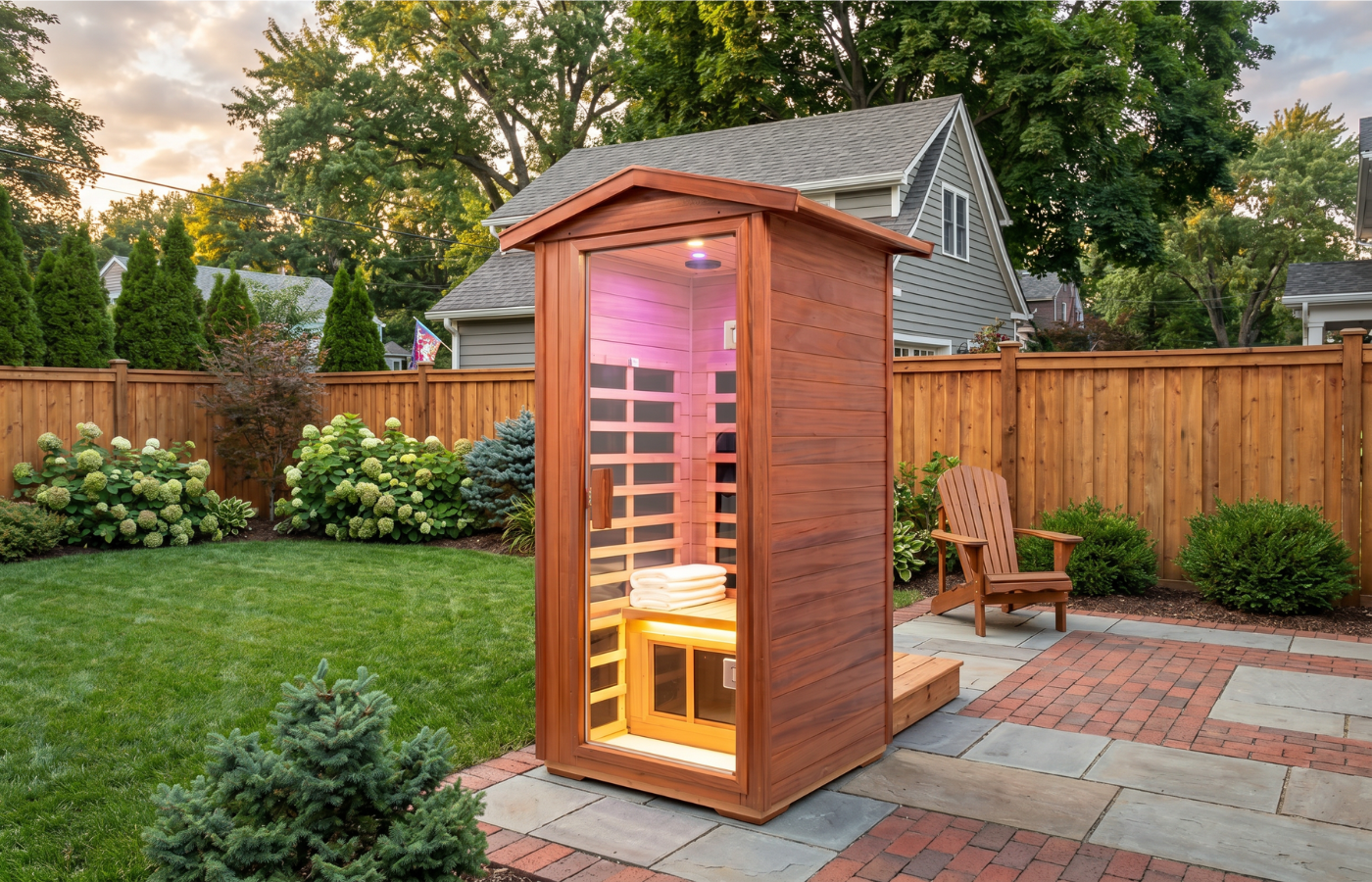
For years, the infrared sauna market followed a predictable formula:
bigger meant better.
Larger cabins.
More heaters.
More features.
More aggressive luxury positioning.
And while oversized spa-style saunas still exist, the industry has quietly started moving in a different direction.
Today, many homeowners are prioritizing something else entirely:
practical sauna ownership.
Across the home wellness industry, buyers are increasingly choosing sauna designs that feel:
- easier to integrate into daily life
- more efficient to operate
- more comfortable for regular use
- better suited for modern homes
And interestingly, this shift is changing how many manufacturers now approach sauna design itself.
|
Past
bigger meant better
|
→
|
Now
practical ownership
|
The infrared sauna industry's most important shift isn't technological — it's behavioral. Buyers are moving from "how impressive?" to "how often will I actually use this?"
The Modern Sauna Buyer Looks Different Than 10 Years Ago
A decade ago, home saunas were often treated as luxury additions primarily associated with:
- large homes
- vacation properties
- spa-style installations
- occasional use
But modern consumer behavior has changed significantly.
Today's sauna buyers are increasingly:
|
Profile 01
Remote workers
|
Profile 02
Urban homeowners
|
Profile 03
Smaller-space optimizers
|
- wellness-focused homeowners
- fitness-oriented consumers
According to Global Wellness Institute data, the wellness economy has continued expanding rapidly, with home wellness becoming one of the fastest-growing consumer categories. (globalwellnessinstitute.org)
As a result, sauna ownership is becoming less about luxury display —
and more about realistic daily integration.
Why Oversized Sauna Designs Are Becoming Less Practical
One of the biggest changes happening in the sauna industry is the growing awareness that larger saunas are not always better for residential use.
Many homeowners eventually realize oversized units often create tradeoffs:
| Larger Sauna Tradeoff | Why It Matters Long Term |
|---|---|
| Longer heat-up times | Reduces convenience for short sessions |
| Higher energy usage | Increases long-term operating costs |
| More required space | Limits placement flexibility inside homes |
| Lower solo-use efficiency | Many sessions are used by one person anyway |
| Higher maintenance demands | Ownership becomes more complicated over time |
And because many home sauna sessions are actually used individually, compact layouts are increasingly viewed as more practical for everyday ownership.
The Rise of the 1-Person Infrared Sauna
One of the fastest-growing categories in the infrared sauna market is the compact 1-person sauna.
Why?
Because modern homeowners increasingly value:
- space efficiency
- faster heat-up times
- easier installation
- lower operational burden
- consistent daily usability
particularly inside:
- bedrooms
- home gyms
- wellness corners
- smaller modern homes
This trend mirrors broader movements happening across modern home design where consumers prioritize:
usable space over excessive square footage.
And for many homeowners, a sauna that fits naturally into everyday routines creates significantly more long-term value than a larger installation used only occasionally.
Before choosing a sauna size, count how many sessions per week you'll actually use solo vs. shared. Most homeowners discover solo use dominates — which makes 1-person layouts the more practical default.
Why "Daily Usability" Is Becoming the Industry's Most Important Factor
One of the biggest lessons the sauna industry has learned over the past several years is that consistency matters more than intensity.
Consumers increasingly want saunas that feel:
- easy to enter
- easy to operate
- comfortable for regular sessions
- practical to maintain
because wellness habits only become valuable when they are sustainable.
This is one reason many modern sauna brands are shifting focus toward:
- simplified controls
- balanced heating environments
- practical layouts
- approachable ownership experiences
instead of chasing excessive feature complexity.
Heat Comfort Is Quietly Replacing Extreme Heat Marketing
For years, much of the sauna industry emphasized:
- maximum temperatures
- heater output
- intense heat experiences
But long-term sauna users often describe quality differently.
Many experienced owners eventually prioritize:
- smoother heat distribution
- breathable environments
- comfortable session duration
- balanced thermal experience
Research around infrared sauna environments has suggested many users tolerate lower-temperature infrared sessions more comfortably compared to more aggressive heat exposure. (pmc.ncbi.nlm.nih.gov)
This shift toward thermal comfort instead of pure intensity is becoming increasingly visible across modern sauna design.
Material Selection Is Becoming More Important Than Marketing Features
Another major shift happening in the infrared sauna market is the growing focus on material quality and environmental feel.
Consumers increasingly ask questions about:
- wood durability
- maintenance behavior
- environmental comfort
- long-term stability
rather than simply comparing feature lists.
| Wood Type | Why Buyers Choose It | Common Environment Fit |
|---|---|---|
| Hemlock | Clean appearance and structural stability | Modern indoor spaces |
| Cedar | Traditional sauna aroma and moisture resistance | Classic sauna environments |
| Mahogany | Premium visual warmth and density | Luxury interior spaces |
| Fir | Traditional structural durability | Outdoor-oriented applications |
For a deeper comparison of sauna wood types, you can also explore:
[Infrared Sauna Buyer's Guide: Choosing The Perfect Wood Species For You]
Increasingly, homeowners understand that material behavior impacts ownership experience far more than short-term visual impressions.Why the Sauna Industry Is Moving Toward "Balanced Premium"
Perhaps the biggest overall shift happening in the infrared sauna market is the move away from exaggerated luxury positioning toward what many consumers now value more:
balanced premium.
That means prioritizing:
- durability
- usability
- practical comfort
- manageable maintenance
- thoughtful sizing
- realistic home integration
instead of simply maximizing feature count or visual impact.
And this trend aligns closely with broader consumer behavior changes happening throughout home wellness and modern living.
Consumers increasingly want products that feel sustainable long term — not products that feel impressive only initially.
How SalusHEAT Fits Into the Industry's New Direction
At SalusHEAT, the focus is not simply on designing infrared saunas that look visually premium.
The broader goal is building sauna environments that work naturally within real daily life.
That includes emphasizing:
- balanced thermal comfort
- practical layouts
- approachable sizing
- durable materials
- efficient home integration
because increasingly, the best sauna experience is not defined by excess.
The infrared sauna industry's healthiest shift in years isn't about new technology — it's about honest sizing.
- Practical layouts that fit real homes
- Balanced thermal comfort, not extreme heat
- Approachable sizing for daily use
- Durable materials for long-term ownership
- Factory-direct pricing, no luxury-marketing overhead
Because the most important sauna feature is the one that doesn't show up in a spec sheet — whether you'll still want to use it next year.
Final Thoughts
The infrared sauna industry is evolving quickly.
But perhaps the biggest shift is not technological.
It is behavioral.
Modern homeowners increasingly prioritize:
- usability over excess
- comfort over intensity
- practicality over showroom impact
- sustainability over novelty
And as home wellness continues growing, smaller and smarter sauna designs are likely to become even more important across the industry.
Because ultimately, the best sauna is rarely the one that feels the most dramatic on day one.
It is usually the one people continue using comfortably for years.
Frequently Asked Questions
Why are smaller infrared saunas becoming more popular?
Smaller sauna layouts are easier to integrate into modern homes and often create better daily usability.
Are 1-person infrared saunas worth it?
For many homeowners, compact 1-person saunas offer practical efficiency, faster heating, and easier long-term use.
Is bigger always better for home saunas?
Not necessarily. Many oversized saunas create higher operational costs and lower convenience for daily use.
What matters most when buying an infrared sauna?
Comfort, usability, durability, practical sizing, and long-term ownership experience often matter more than extreme specifications.
Where can I learn more about infrared sauna usage?
If you still have questions about salusheat infrared saunas, installation, or daily use, you can visit the Salusheat FAQ page for detailed answers to the most common sauna questions.
