
What Long-Lived People Understand About Recovery That Most of Us Ignore
Most wellness advice focuses on performance.
How to work harder.
How to exercise more efficiently.
How to optimize productivity.
How to get more out of every day.
But when researchers study some of the world's longest-lived populations, they often find a different pattern.
These communities are not necessarily obsessed with optimization.
Instead, they tend to build lifestyles that support recovery.
Recovery from physical effort.
Recovery from stress.
Recovery from daily demands.
Recovery from life itself.
And over time, that difference may matter more than many people realize.
Because longevity is not simply about how much energy you can produce.
It is also about how effectively you can restore it.
"It is also about how effectively you can restore it."
The world's longest-lived populations are not the ones optimizing hardest. They're the ones recovering most patiently.
The Longevity Conversation Has Changed
A decade ago, most conversations about healthy aging centered around avoiding disease.
Today, researchers increasingly discuss something broader:
Healthspan.
Healthspan refers to the number of years people remain active, independent, and capable of enjoying everyday life.
Living longer is important.
Living well is equally important.
And many scientists now believe that resilience — the ability to adapt and recover from stress — is one of the defining characteristics of healthy aging.
This shift has encouraged greater interest in daily habits that support recovery and long-term wellness.
What Researchers Learned From Long-Lived Populations
Several regions often referred to as "Blue Zones" have attracted global attention because of their unusually high concentrations of long-lived individuals.
While their cultures differ significantly, researchers have identified several recurring themes:
What's striking is that none of these habits are extreme.
Most are simple.
But they are practiced consistently over long periods of time.
You don't need to move to a Blue Zone to apply their lessons. The principle is portable: small, repeatable recovery practices often outperform dramatic wellness overhauls.
Why Scientists Became Interested in Sauna and Longevity
For generations, sauna bathing was viewed primarily as a cultural tradition.
Particularly in Finland, where sauna has long been woven into everyday life.
Over time, researchers began asking an interesting question:
Could regular heat exposure be associated with healthy aging and long-term wellness?
One of the most frequently referenced studies, published in JAMA Internal Medicine, followed more than 2,000 Finnish men for approximately two decades.
Researchers observed that individuals who used a sauna more frequently tended to experience more favorable long-term health outcomes than those who used a sauna less often.
Importantly, these findings show association rather than direct causation.
Researchers do not claim that sauna alone creates longevity.
However, the results generated significant scientific interest and helped expand research into heat exposure, recovery, cardiovascular wellness, and lifestyle habits.
Organizations including:
- Harvard Health Publishing
- Mayo Clinic
- Cleveland Clinic
have since discussed the growing body of evidence surrounding sauna use and overall wellness.
What makes sauna particularly interesting is that it naturally encourages behaviors often associated with healthy aging:
- slowing down
- reducing stimulation
- creating recovery time
- maintaining routine
- supporting relaxation habits
A frequently cited study in JAMA Internal Medicine followed 2,000+ Finnish men over approximately 20 years, observing that more frequent sauna use was associated with more favorable long-term health outcomes. These findings show association, not direct causation.
The Missing Piece: Recovery Capacity
One concept receiving increasing attention in longevity research is recovery capacity.
Simply put:
How quickly can your body and mind return to balance after stress?
Because life will always contain challenges.
Work deadlines.
Travel.
Exercise.
Family responsibilities.
Unexpected setbacks.
The goal is not eliminating stress entirely.
The goal is improving the body's ability to recover from it.
Many wellness experts now view recovery as an active practice rather than passive rest.
Just as muscles adapt after exercise, resilience develops through cycles of challenge followed by restoration.
This perspective is reshaping how many people approach long-term wellness.
Why Home Wellness Habits Matter
One reason healthy habits fail is surprisingly simple:
they are difficult to maintain.
Consistency often determines whether a wellness practice survives beyond initial motivation.
This is why home wellness environments continue growing in popularity.
Convenience removes friction.
And when healthy habits become easier, they become more sustainable.
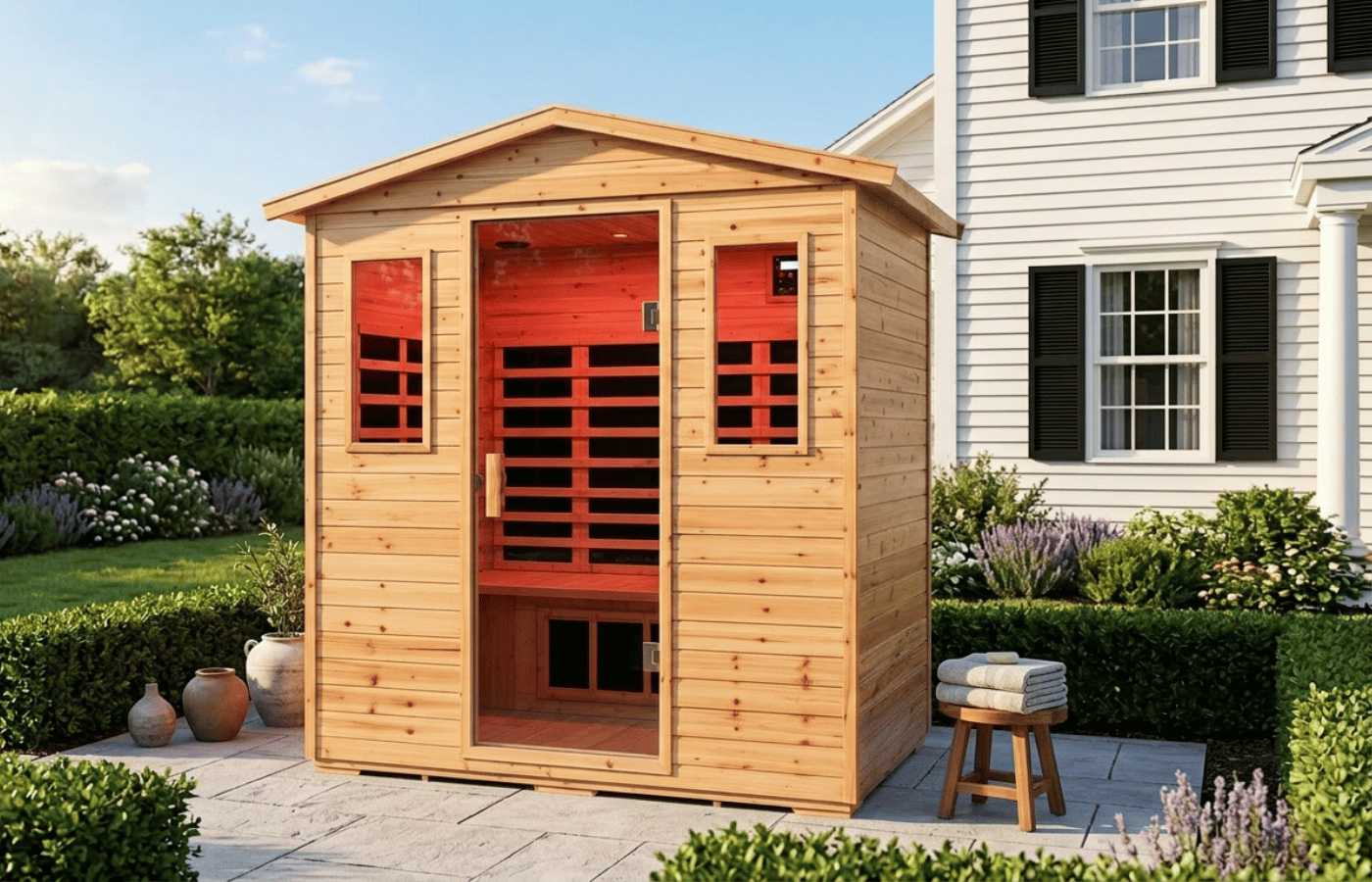
For many homeowners, a home infrared sauna evolves into something more than a product.
It becomes:
- a recovery space
- an evening ritual
- a place to disconnect from screens
- a moment of intentional stillness
The easier recovery becomes, the more likely people are to make it part of everyday life.
Why Low EMF Design Matters for Long-Term Ownership
When a wellness routine becomes part of daily life, details begin to matter.
Many consumers researching infrared saunas eventually encounter questions about EMF exposure.
While modern infrared saunas generally operate within accepted safety guidelines, many buyers prefer minimizing unnecessary exposure whenever possible.
This is one reason ultra-low EMF engineering has become increasingly important.
At SalusHEAT, the Maxwell Series was designed around this philosophy.
Not because low EMF alone defines wellness.
But because long-term habits should feel comfortable, practical, and reassuring.
When people invest in a sauna they plan to use for years, confidence in the environment matters just as much as comfort.
The Maxwell Series exists for one reason: when a wellness habit becomes a daily ritual, the environment should support that ritual for decades.
- Ultra-low EMF engineering
- Daily-use comfort design
- Long-session thermal balance
- Practical home integration
Because a wellness habit that lasts 20 years is worth more than a feature list that impresses for 20 minutes.
Healthy Aging Is Usually Less Dramatic Than We Think
The wellness industry often promotes dramatic transformations.
Yet longevity research repeatedly points toward something much simpler.
Healthy aging is often built through:
- daily movement
- meaningful routines
- quality recovery
- consistent sleep
- stress management
- supportive environments
None of these habits are particularly exciting on their own.
But practiced consistently, they become remarkably powerful.
The world's healthiest populations rarely rely on shortcuts. They rely on habits. Repeated patiently over decades.
Final Thoughts
Perhaps the most valuable lesson from longevity research is this:
Long life is not built in a single day.
It is built through thousands of ordinary days.
Days where we move.
Days where we recover.
Days where we create space to slow down.
Infrared sauna use is not a guarantee of longevity.
No single habit can make that promise.
But creating intentional recovery rituals, supporting long-term consistency, and investing in sustainable wellness habits may help build a healthier relationship with aging itself.
And increasingly, that may be one of the most important wellness investments we can make.
Not the one that impresses today.
Frequently Asked Questions
Does sauna use increase lifespan?
Researchers continue studying associations between regular sauna use and long-term health outcomes. While findings are promising, no single habit can guarantee longevity.
Why is recovery important for healthy aging?
Recovery supports resilience, stress management, physical restoration, and long-term consistency in healthy lifestyle habits.
What is recovery capacity?
Recovery capacity refers to the body's ability to return to balance after physical, mental, or emotional stress.
Why do many wellness-focused homeowners choose low EMF infrared saunas?
Many consumers prefer minimizing unnecessary environmental exposure while creating wellness environments intended for long-term, consistent use.
Where can I learn more about infrared sauna usage?
If you still have questions about infrared saunas, installation, or daily use, you can visit the Salusheat FAQ page for detailed answers to the most common sauna questions.
