
Winter Sauna: What Not to Do When It's Freezing Outside
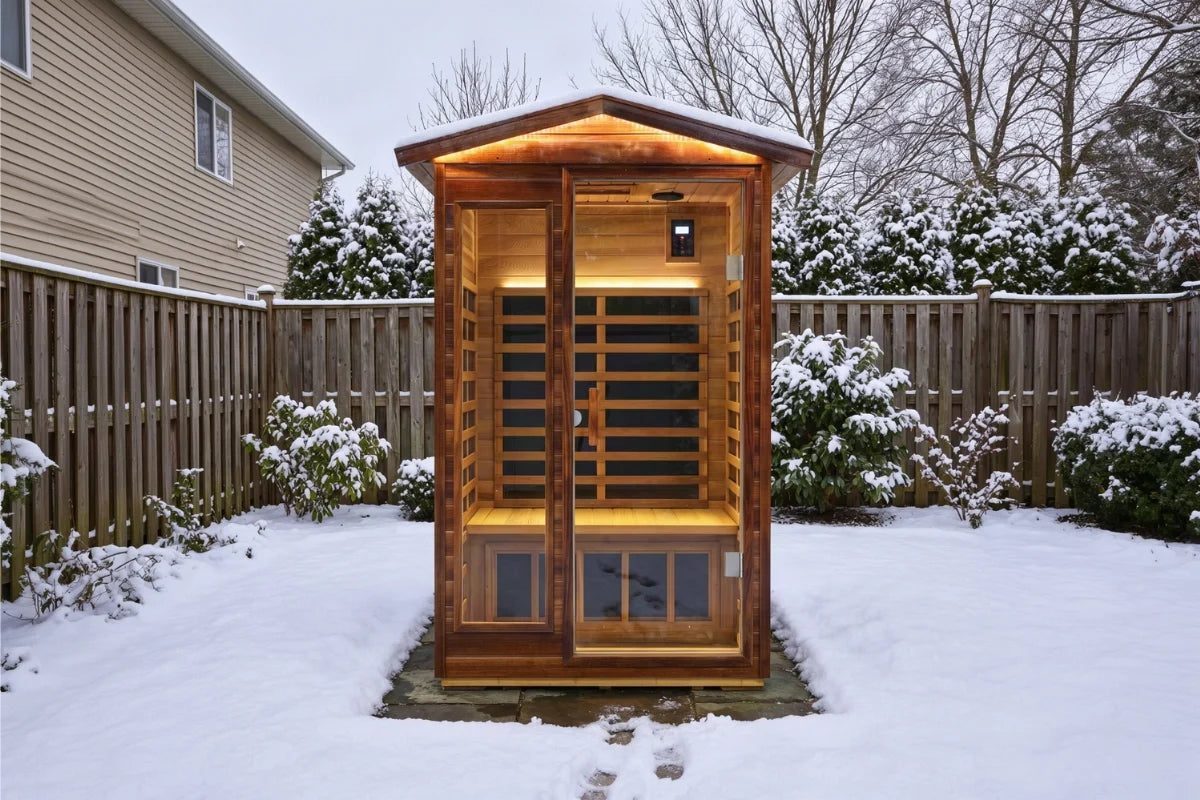
Winter is when most people use their sauna the most.
It's also when most of the avoidable mistakes happen, because the cold outside changes things you wouldn't think twice about in July.
None of these are dramatic. They're the small things a friend would mention on the way out the door.
Don't Turn the Heat Up to Compensate
It's fifteen degrees outside, so the instinct is to push the thermostat to make up for it. Please don't.
Far infrared doesn't warm the air much. It warms you. Setting it to 160°F in January doesn't make the session feel warmer — it makes you overheat faster and cut it short.
The cabin will take a little longer to reach temperature in cold weather. That's normal. Give it the extra ten minutes instead of the extra ten degrees.
In an outdoor sauna, the panels are fighting the outside air all day. A January preheat takes longer than a June one — that's physics, not a fault.
Add time, not temperature. Your session should feel the same in February as it does in May.
Don't Go In Cold, Damp, or Empty
Three things people do in winter without thinking.
Don't get in straight from the cold. If you've been outside shovelling or walking the dog, give yourself ten minutes indoors first. Going from freezing to 140°F in two minutes is a shock to your circulation, and it's the most common reason a session feels awful.
Don't get in wearing damp clothes. Wet fabric against skin in a hot cabin stops you sweating properly and feels cold the moment the session ends.
Don't skip water because you're not thirsty. Cold weather suppresses thirst and you sweat just as much. A glass before and a bottle beside you is the whole rule.
Don't Drink First
It's the party season, and this one is worth being blunt about.
Alcohol widens your blood vessels and dulls the signals that tell you you're too hot. Combined with a 140°F cabin and then a cold walk back to the house, that's the setup for fainting — and it happens to people who've used saunas for years.
One drink after, not before. It's not a rule about virtue, it's a rule about staying upright.
You feel dizzy, nauseated, or suddenly chilled while you're in the heat. That last one is the signal people ignore — feeling cold in a hot room means your body is struggling to regulate.
Step out, sit down somewhere cool, drink water. Ten minutes in the cabin still counts as a session.
Don't Make the Cold Plunge a Contest
The step outside is the best part of a winter sauna. It's also the part people overdo in the first week of January.
Don't go barefoot onto ice. Sandals or boots by the door. A slip on a frozen step ends more sauna habits than any other single thing.
Don't stay out long enough to shiver hard. Thirty to sixty seconds is plenty. Shivering means you've crossed from bracing into cooling down, and getting back into the heat from there feels terrible.
Don't do it alone the first few times. Not because it's dangerous for most healthy adults — because nobody's around if you get lightheaded, and the second time is easier when you already know how your body reacts.
Skip the snow angel. Step out onto the deck, stand in the cold air with the door open behind you for a minute, then go back in.
Air alone does most of what an ice plunge does for how a session feels, without the shock or the wet footprints through the house.
Don't Sit in a Wet Towel Afterwards
The most common winter mistake has nothing to do with heat.
You finish, you're warm, you sit down in the kitchen with a damp towel round your shoulders and a wet swimsuit still on, and you stay there for twenty minutes because you feel great.
Then you get cold. Properly cold, the kind that takes an hour to shake, because wet fabric against cooling skin pulls heat out of you fast.
Dry off, change, and put something warm on within five minutes. If there's one habit worth building, it's this one.
Don't Use the Cabin as a Drying Room
Gloves, hats, a wet coat — the warm cabin looks like the obvious place to dry them. It isn't.
Wet wool and synthetic gear hold moisture against the wood and the heater grilles. Do that all winter and you'll have a musty cabin by March and a stain you can't get out.
Wet gear goes on a rack indoors, not in the sauna.
Don't Close It Up Wet
Ten to fifteen minutes with the door ajar after every session, all winter. In summer this is a nice habit; in winter it's the difference between a cabin that smells like cedar in April and one that smells like a basement.
Cold air holds less moisture, so it moves through the cabin faster. That's exactly what you want while it dries out.
If the cabin lives outside, brush the snow off the roof and clear the area in front of the door rather than letting it bank up against the threshold. Snow that piles against the glass melts into the door channel and refreezes overnight.
A sauna that gets used stays dry. A sauna that sits cold for three months collects damp in exactly the places you can't see.
January and February are the best months to use an outdoor sauna — and the worst months to leave one idle.
Don't Assume the Red Light Needs More Time
If your home sauna has a red light therapy panel, cold weather changes nothing about it.
The LEDs put out the same output at twenty degrees as at eighty. What changes is the cabin's preheat, not the light.
What does change is your patience. Ten to fifteen minutes facing the panel, at roughly arm's length, is still the useful range — sitting further away for longer doesn't make up for distance.
On a genuinely cold evening, many people run the red light panel alone for ten minutes with the heaters off while the cabin warms. It's a pleasant way to start, and it's what separate controls are for.
Don't Skip the Five-Minute Check
Winter is hard on an outdoor cabin, and the failures are all small and all early.
Look at the door seal. Cold makes rubber stiff. If it's stopped sitting flat, the heaters fight a draft all season.
Clear the channel under the glass. Ice in that track is how seals get torn.
Walk the outside wall and look at the fixings. Freeze-thaw cycles loosen screws faster than summer does. A quarter turn in November saves a panel in March.
Five minutes, once a month, from November to March. That's the entire winter maintenance list for most 2 person sauna owners.
The Bottom Line
Winter sauna is the best version of it. Cold air, warm cedar, fifteen minutes where nothing is asking anything of you.
The mistakes are all small: too hot, too fast, too wet, too long outside, and a cabin closed up damp.
Fix those five and the season takes care of itself.
If you're still working out how often to use it, or how long to stay in, we've written both. And if your cabin lives outside, the winter-specific care is in our maintenance guide.
Frequently Asked Questions
Can you use an outdoor sauna in freezing weather?
Yes, and it's when most owners use theirs most. Allow a longer preheat and keep the path and door clear of snow.
Should you raise the temperature in winter?
No. Add preheat time instead. A higher setting makes you overheat faster, not warmer.
Is it safe to go from a hot sauna into snow?
For most healthy adults, briefly, yes — but not alone the first time, not barefoot, and not long enough to shiver hard.
Why do I feel cold in a hot sauna?
That's a warning sign, not a quirk. Step out, sit somewhere cool and drink water.
Can I dry wet clothes in the sauna?
No. It drives moisture into the wood and grilles. Use a rack indoors.
Does the red light panel work differently in cold weather?
No. Output is unaffected. Only the cabin's preheat time changes.
We've been building sauna products since 2004, and the winter questions we get are almost never about the heater. They're about the door seal, the snow, and how long to stay out in the cold.
Our outdoor range is built for it: red cedar or mahogany, classic American gable roof with eaves that carry past the door, double-glazed front wall, tea and green tinted tempered glass, and the option of a red light therapy panel in the ceiling. Two-year warranty on heaters and electrical, one year on the wood.
- Outdoor cabins in red cedar or mahogany, one to four person
- Double-glazed front wall, for condensation and overnight heat loss
- Gable roof with projecting eaves, keeping snow and rain off the door
- Optional ceiling-mounted red light therapy panel, on separate controls
- Visible, serviceable fixings — a quarter turn is a one-minute job in November
- Two-year warranty on heaters and electrical, one year on the wood
If you're in a cold climate and unsure which model suits your winters, write to us. We'll tell you honestly what each one needs.
Write to us. We answer every one.
This article is for informational purposes only and does not constitute medical advice. Heat tolerance varies by individual. Anyone managing a cardiovascular condition, who is pregnant, or who takes medication affecting heat response should consult a physician before sauna use, and should keep sessions shorter and temperatures lower.
