
What Actually Determines Outdoor Sauna Longevity?
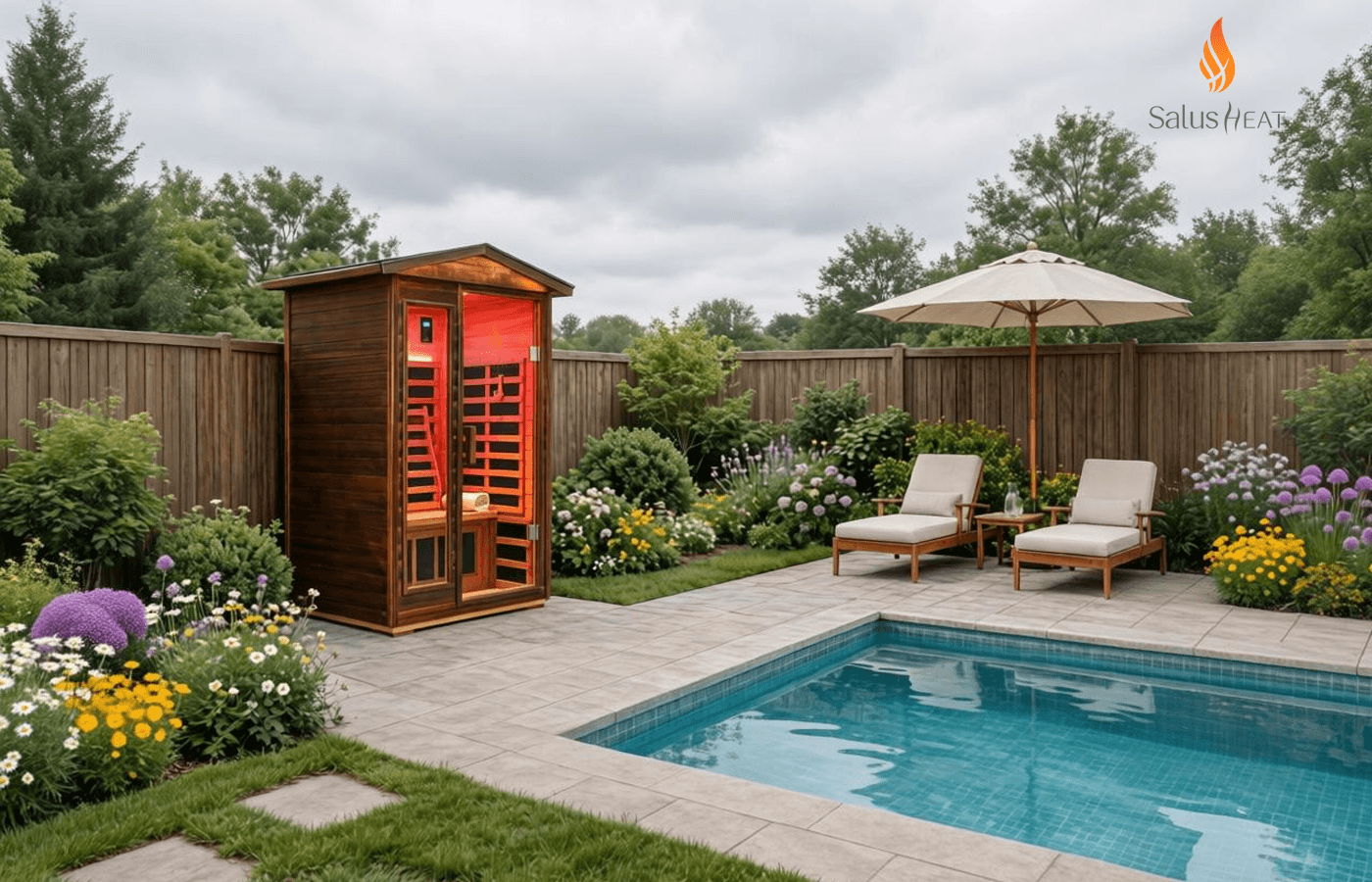
Most outdoor saunas are marketed through visuals first.
Warm lighting.
Beautiful cedar textures.
Modern backyard installations.
And while aesthetics absolutely matter, they often distract from a far more important question:
How well will the sauna actually age over time?
Because outdoor sauna performance is not measured on delivery day.
It is measured years later — after repeated exposure to:
Visual aesthetics, showroom impact, immediate impression
Material stability, weather resistance, structural integrity
"Outdoor sauna performance is not measured on delivery day. It is measured years later."
That is where the true difference between outdoor sauna construction begins to appear.
And interestingly, many of the factors that determine long-term durability are rarely discussed in depth during the buying process.
Outdoor saunas are environmental engineering problems disguised as wellness products. The aesthetic is what gets bought. The engineering is what survives.
Outdoor Sauna Durability Is Primarily an Environmental Engineering Problem
Many buyers naturally approach sauna shopping from a comfort perspective:
- How hot does it get?
- What wood does it use?
- How does it look in the backyard?
But outdoor sauna longevity is fundamentally an environmental stress-management challenge.
Unlike indoor saunas, outdoor units must continuously withstand external pressure from changing climate conditions.
That means every component is under long-term stress:
- wood fibers absorb and release moisture
- exterior surfaces expand and contract
- roof systems redirect water loads
- insulation layers manage thermal fluctuation
- fasteners and joints respond to structural movement
Over time, durability becomes less about individual materials alone and more about how the entire system manages environmental instability.
Why Many Outdoor Saunas Begin Aging Faster Than Expected
One of the most misunderstood realities in the outdoor sauna industry is that failure rarely appears suddenly.
Instead, degradation tends to happen gradually through cumulative exposure.
What begins as a minor issue:
- slight wood movement
- small moisture retention points
- uneven thermal expansion
- tiny ventilation inconsistencies
can slowly compound over multiple seasons.
This is why some outdoor saunas appear visually attractive during the first year, but begin developing:
- joint separation
- exterior fading
- insulation inefficiency
- moisture stress around seams
- accelerated weather fatigue
far earlier than buyers originally expected.
In many cases, the issue is not a single weak component — but a collection of small structural compromises interacting over time.
When touring an outdoor sauna model, ask the manufacturer to show you a 3+ year-old installed unit in a real climate — not a freshly built showroom sample. That's where you'll see what the construction actually does over time.
The Most Important Outdoor Sauna Variables Are Usually Structural, Not Cosmetic
Wood Selection Is Less About Appearance — And More About Movement Behavior
Most consumers evaluate sauna wood visually.
But professionals evaluate wood structurally.
The key question is not simply:
Does this wood look premium?
It is:
How predictably does this material behave under environmental stress?
Because outdoor wood is constantly responding to atmospheric conditions.
As humidity rises:
- wood absorbs moisture
- fibers swell
- structural dimensions shift
As conditions dry:
- moisture leaves the wood
- contraction occurs
- stress redistribution begins
Over repeated cycles, unstable materials experience significantly greater fatigue.
This is one reason why dimensional stability is often more important than visual softness or color tone.
Comparative Material Behavior in Outdoor Sauna Environments
| Material | Environmental Strength | Long-Term Consideration |
|---|---|---|
| Cedar | Naturally resistant to insects and moisture exposure | Requires periodic surface maintenance to preserve appearance and stability |
| Hemlock | Stable indoor performance with clean visual consistency | Less tolerant of prolonged outdoor saturation cycles |
| Mahogany | Dense grain structure with strong dimensional stability | Higher material cost but often stronger long-term resistance |
| Fir | Strong structural integrity and traditional construction feel | Needs protective exterior treatment in harsher climates |
| Hybrid Exterior Systems | Enhanced weather resistance through layered exterior engineering | May sacrifice some traditional all-wood aesthetics |
Roof Engineering Is One of the Least Understood Parts of Sauna Longevity
Many buyers underestimate how aggressive water exposure becomes over time.
Rain is not dangerous because it happens once.
It becomes dangerous because exposure is repetitive and cumulative.
Roof systems therefore play a much larger role than most consumers realize.
A well-designed roof system helps reduce:
- standing water exposure
- repeated edge saturation
- moisture intrusion around seams
- thermal instability from trapped dampness
In colder climates, this becomes even more critical because freeze-thaw cycling increases material stress significantly.
Repeated freezing expansion inside small moisture retention areas can accelerate long-term deterioration.
Thermal Stress Is Often More Damaging Than Heat Alone
Many consumers assume sauna heat itself creates the primary stress.
In reality, fluctuating temperature behavior is often more destructive than absolute heat.
Outdoor saunas continuously transition between:
Poorly balanced construction experiences repeated stress redistribution during these cycles.
Over time, that contributes to:
- panel movement
- insulation fatigue
- seal weakening
- uneven material aging
This is why thermal consistency is often associated with better long-term durability.
Why "Low Maintenance" Claims Are Often Oversimplified
Every outdoor sauna requires maintenance eventually.
The more useful question is:
How predictable and manageable is that maintenance?
Some systems age gracefully with periodic care.
Others require constant refinishing because their materials experience greater environmental instability.
This distinction becomes increasingly important for long-term ownership satisfaction.
Because durability is not simply about surviving weather.
It is also about:
- maintenance burden
- usability over time
- ownership practicality
A sauna that technically lasts but becomes exhausting to maintain often fails from a user-experience perspective.
How Outdoor Sauna Design Philosophy Is Evolving
The outdoor sauna market is gradually moving away from purely showroom-driven construction.
Increasingly, buyers care about:
- structural longevity
- environmental resilience
- maintenance efficiency
- integration into real residential environments
This shift is influencing how modern outdoor saunas are designed.
At SalusHEAT, the emphasis is not simply on visual impact.
The broader focus is creating systems that balance:
- durability
- daily usability
- environmental practicality
- long-term ownership comfort
because true outdoor performance is measured over years — not first impressions.
We design outdoor saunas for the customer who will still be using theirs in 8 years — not the one who will be on Instagram for the first 8 months.
The best outdoor sauna is the one that quietly does its job through years of weather, season after season.
Final Thoughts
The outdoor sauna industry often focuses heavily on immediate aesthetics.
But long-term performance is usually determined by less visible engineering decisions:
- material stability
- moisture control
- thermal consistency
- structural movement management
- environmental resilience
And those factors become increasingly important over time.
Because ultimately, outdoor sauna durability is not proven in a showroom.
It is proven through years of repeated environmental exposure, seasonal stress, and everyday use.
That is where construction quality becomes visible.
Frequently Asked Questions
What is the most durable wood for an outdoor sauna?
Cedar and mahogany are often valued for their dimensional stability and resistance to moisture-related stress over time.
Why do some outdoor saunas warp or crack?
Repeated moisture absorption and thermal expansion cycles can gradually stress unstable materials and joints.
How important is roof design for outdoor saunas?
Extremely important. Roof geometry directly affects moisture management and long-term exposure behavior.
Are outdoor infrared saunas high maintenance?
Maintenance levels vary significantly depending on exterior materials, environmental exposure, and construction quality.
Where can I learn more about infrared sauna usage?
If you still have questions about outdoor infrared saunas, installation, or daily use, you can visit the Salusheat FAQ page for detailed answers to the most common sauna questions.
