
Unveiling the Wellness Secrets of Ceramic & Carbon Infrared Sauna: A Deep Dive into Health Benefits
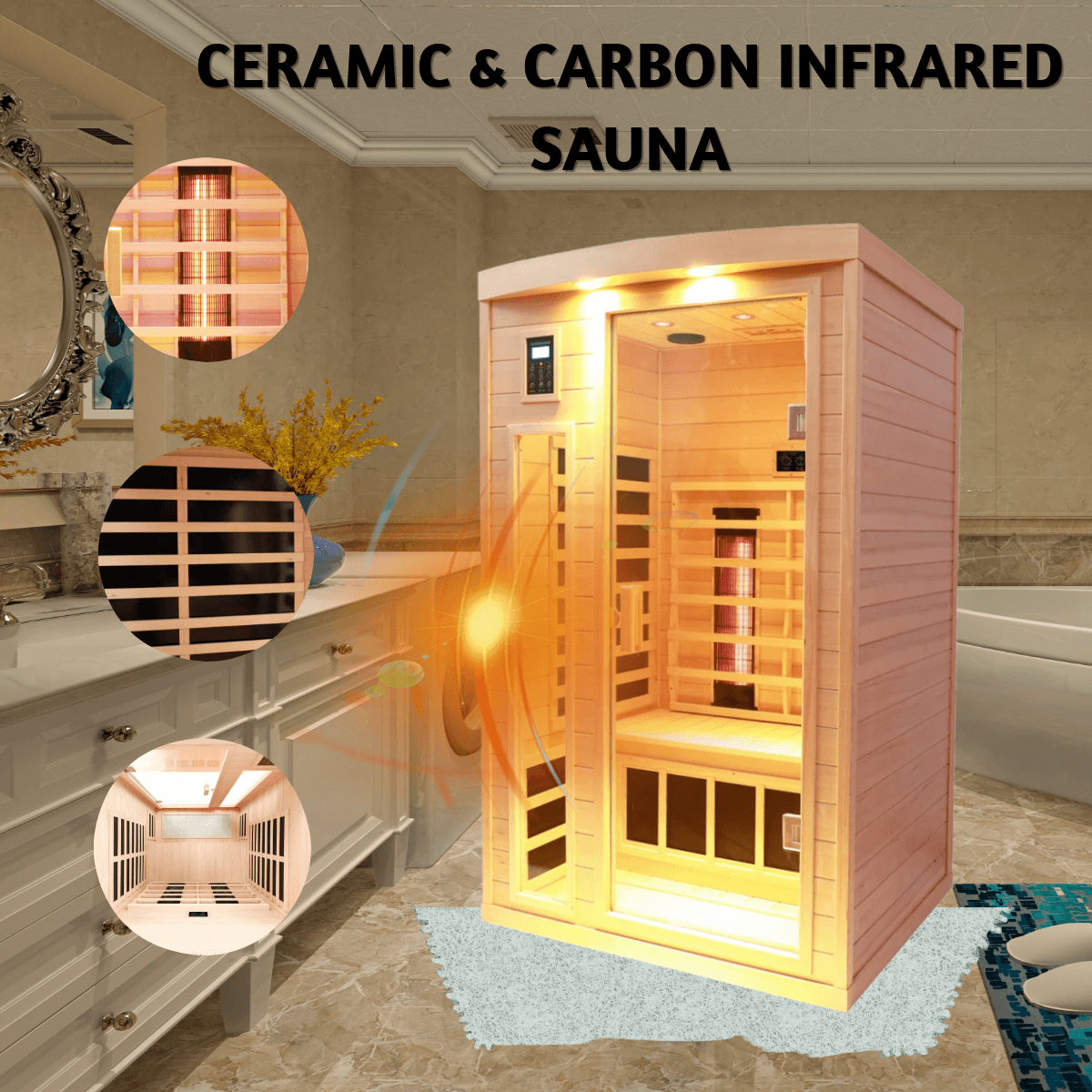
A practical guide to ceramic infrared saunas — the technology, the real benefits, and the most common reason first-time owners think theirs isn't working as expected.
Infrared sauna technology has moved quickly over the past decade. The earliest models were simple carbon panels. Then full-spectrum. Then low-EMF. And now, increasingly, ceramic — a hybrid heating approach that pairs ceramic tubes with carbon crystal panels to deliver a different kind of heat.
SalusHEAT has been manufacturing ceramic + carbon infrared saunas for over a decade. The technology is not new. The buyer awareness is. Most first-time ceramic sauna owners have a lot of questions, and one of them comes up far more often than the others: "Why doesn't mine feel as hot as I expected?"
This article answers both halves of that conversation. First, what a ceramic sauna actually is and what it does. Then — for buyers who already own one, or are about to — what to do if the experience isn't matching expectations.
The single most common reason a new ceramic sauna owner thinks theirs isn't hot enough has nothing to do with the sauna. It has to do with how infrared heat is supposed to feel.
What A Ceramic Sauna Actually Is
A ceramic sauna is a modern variant of the traditional infrared sauna. The core difference is the heating element.
Traditional infrared saunas use carbon crystal panels to emit far-infrared light. Ceramic saunas add specialized ceramic tubes that emit far-infrared light as well, but with a different intensity profile and a different depth of penetration. SalusHEAT's hybrid design combines both: ceramic tubes for high-intensity far-infrared, plus carbon panels for even, full-body coverage.
The result is a sauna that reaches usable warmth faster than a pure carbon design, and that maintains a more stable surface temperature throughout a session — typically around 160°F at one foot from the heater, in a sauna that tops out in the 120–140°F air temperature range.

Quick Reference: Ceramic Sauna Specs At A Glance
| Spec | Value |
|---|---|
| Surface temperature (at the heater) | Up to ~180°F |
| Typical air temperature inside the sauna | 120–140°F |
| Heating element type | Ceramic tubes + carbon crystal panels (hybrid) |
| Wavelength emitted | Far-infrared (4–14 µm) |
| Time to full operating temperature | 20–30 minutes |
This is the operating envelope. The numbers are useful to know, because most of the "my sauna doesn't feel hot enough" complaints are actually expectations mismatched with how infrared heat is designed to work.
What Ceramic Heat Actually Does
Ceramic heat is not the same as the air-temperature heat of a traditional sauna. The difference is important, because it changes what the experience feels like — and what benefits you should expect.
The benefits below are well established for infrared heat in general. The ceramic element adds depth of penetration and consistency that some users find more pronounced than with carbon panels alone.
Detoxification — Sweating is one of the body's natural mechanisms for releasing certain compounds. Ceramic saunas, with their gentle but penetrating heat, encourage a deep, even sweat. The effect is real, though the language around it is often overstated. Sweating supports the body's natural processes; it does not perform miracles.
Improved Circulation — The deep heat from ceramic tubes encourages vasodilation, the widening of blood vessels. This increases blood flow across the body and supports cardiovascular health over time.
Relief From Muscle And Joint Pain — Far-infrared heat penetrates several centimeters into muscle and connective tissue. For people with chronic stiffness, post-exercise soreness, or arthritis, regular sessions are a useful part of a broader management routine.
Stress Reduction — The combination of warmth, stillness, and a screen-free environment produces a measurable drop in sympathetic nervous system activity. Most regular users report better sleep within a few weeks of consistent use.
Skin Rejuvenation — Increased blood flow to the skin supports collagen production and gives the complexion a noticeable warmth. This is a subtle, long-term effect rather than an immediate one.
Boosted Metabolism — Heart rate increases during a session, similar to a light walk. This contributes to overall energy expenditure. The effect is meaningful over months, not dramatic per session.
Enhanced Immune Function — Some research suggests regular infrared sauna use supports white blood cell production and immune response. The evidence is still developing, but the direction is consistent with what is known about the body's response to mild, repeated heat stress.
Why Your Ceramic Sauna Isn't As Hot As You Expected
This is the question SalusHEAT hears most often from new ceramic sauna owners. The answer is almost always one of a handful of well-understood causes — and almost always has a straightforward fix.
In our experience, the underlying issue is usually that the buyer's mental model of "hot" comes from a traditional Finnish sauna, where the air temperature itself is the primary heat source. In a ceramic infrared sauna, the air is not the heat source — your body is. The temperature of the air is not the right thing to measure.
That said, there are real reasons a ceramic sauna can feel under-powered. Here are the six most common, and the seven things you can do about them.
6 Common Causes
-
Outdoor temperature. In cold weather — especially winter — the sauna has to work harder to maintain internal warmth. Even with a high-quality build, heat loss to a cold exterior will reduce the felt temperature inside.
-
Insulation quality. The insulation in the sauna walls, ceiling, and floor is what keeps the heat where it belongs. A well-insulated sauna retains more warmth; a poorly insulated one loses it quickly to the surrounding space.
-
Preheating period. Most saunas need 20–30 minutes to reach full operating temperature, especially in cold weather. Sessions that begin before the sauna is fully preheated will feel cooler.
-
User behavior. Opening the door frequently, or leaving it cracked during a session, lets heat escape. Each opening costs several degrees of internal temperature that take time to recover.
-
Sauna size relative to the number of users. A 1–2 person sauna filled by one user will feel warmer than the same sauna filled by three. Larger saunas in colder climates need longer preheat times and more stable ambient conditions.
-
Air leaks or gaps. In rare cases, gaps around the door seal, vents, or panel joints let cold air in. This is more common in older saunas that have settled, or in saunas that have been moved.

Each of these causes is addressable. The fixes below map to the causes above — but they are also useful habits in their own right.
7 Things You Can Do
-
Understand the difference between surface and air temperature. The 160–180°F surface temperature at the heater is the right way to measure a ceramic sauna's output. The 120–140°F air temperature is normal. Your body should feel noticeably warmer within 10–15 minutes — that is the intended experience.
-
Give the sauna time to absorb the heat. Far-infrared heat works by direct absorption into the body, not by heating the air around you. It takes a few minutes for that absorption to become obvious. The first 5 minutes of a session often feel milder than they should — the second 5 minutes feel very different.
-
Invest in a well-insulated sauna. SalusHEAT saunas are designed with full-cabin insulation as standard. Buyers comparing brands should ask specifically about wall, ceiling, and floor insulation — not just the heating element.
-
Pre-heat for 20–30 minutes in cold weather. This is the single highest-leverage habit. A fully pre-heated sauna in winter feels meaningfully different from one that was just turned on. Build the preheat into your routine, the way you would preheat an oven.
-
Choose a 1- or 2-person sauna when possible. Smaller saunas reach operating temperature faster and hold it more consistently. For most home use — even couples — a 1–2 person sauna is the right starting point.
-
Keep the door closed during sessions. This sounds obvious, but it is the most common avoidable cause. Plan your session so the door stays closed for the full 20–30 minutes.
-
Use the included heating rocks or radiant heater for extra warmth in winter. SalusHEAT ceramic saunas include an additional heating source for exactly this case. It is not needed in mild weather, but in deep winter it makes a real difference.
Recommended SalusHEAT Ceramic Saunas
For buyers ready to bring ceramic heat home, SalusHEAT offers two hybrid ceramic + carbon models. Both are built around the same heating system, sized for 1- or 2-person use, and engineered for year-round operation in any climate.
Key Insight
A ceramic + carbon hybrid sauna is not the same as a traditional Finnish sauna, and the difference shows up most clearly in the felt temperature. The right mental model is body heat, not air heat.
Most "my sauna isn't hot enough" experiences are caused by outdoor temperature, insufficient preheating, or door-open behavior. The sauna itself is almost always performing to spec.
Smaller (1–2 person) saunas with good insulation, a 20–30 minute preheat, and the door kept closed will deliver the intended experience in any climate — including deep winter.
Is your sauna actually under-powered, or is it just doing what infrared heat is designed to do?
Frequently Asked Questions
What is the difference between a ceramic sauna and a regular infrared sauna?
A regular infrared sauna uses carbon panels to emit far-infrared light. A ceramic sauna adds ceramic tubes that produce higher-intensity far-infrared and a more stable surface temperature. SalusHEAT hybrid designs combine both.
What temperature should a ceramic sauna reach?
Surface temperature at the heater is typically 160–180°F. Air temperature inside the sauna usually sits in the 120–140°F range. The right measurement is how warm your body feels within 10–15 minutes, not the air temperature.
Is a ceramic sauna hotter than a traditional sauna?
No, and that is by design. The air in a ceramic sauna is cooler than a traditional Finnish sauna, but the body's heat absorption is more direct. Most users find a fully pre-heated ceramic session at 130°F more effective than a traditional session at 180°F.
Can a ceramic sauna work in cold weather?
Yes — with proper insulation and a 20–30 minute preheat, a quality ceramic sauna performs well in any climate. The two highest-leverage habits are preheating fully and keeping the door closed during sessions.
Is a ceramic sauna worth the higher price?
For buyers who want a more consistent heat experience and faster warm-up times, yes. For buyers who want the deepest possible far-infrared penetration, the ceramic element is a meaningful upgrade over carbon panels alone.
The Bottom Line
Ceramic infrared saunas are a thoughtful evolution of the home infrared sauna. The technology is mature, the benefits are well documented, and the experience is more consistent than a carbon-only design.
The single most important thing a new owner can do is adjust their mental model: the right temperature to measure is the surface temperature at the heater, not the air temperature of the room. Once that shift is made, most of the "is it working?" questions disappear.
The best sauna is the one you understand well enough to use consistently — and confidently.
